Hot Springs:
Something is happening with my husband, and I am starting to worry about his mental and physical health. When I met him many years ago, he was this tough guy who always pushed me to do more or to go further: “Let’s climb this mountain on the difficult side, let’s ski this very steep slope, let’s make the longest trail.” Back then, he was not into beaches, hot springs, or indulging softies.
And sometime during our Pan-American trip, something changed. He was content to spend days on the beach, coming with me to all the hot springs I could find. Not only did he go with me without complaints – he seemed to enjoy it.
Ivan: Honey, I see what you are implying here, but it’s the mileage, not the age 😉
Marinela: That’s why, before going to Iceland, I researched all the hot spring locations on our way, and I was relatively sure we would visit most of them. And let’s face it – after all these long months of lockdown, we needed all the pampering we could get.
And since we’ll never settle for something small if we can make it bigger, we embarked on a quest for the hot river Reykjadaluron on our first day.
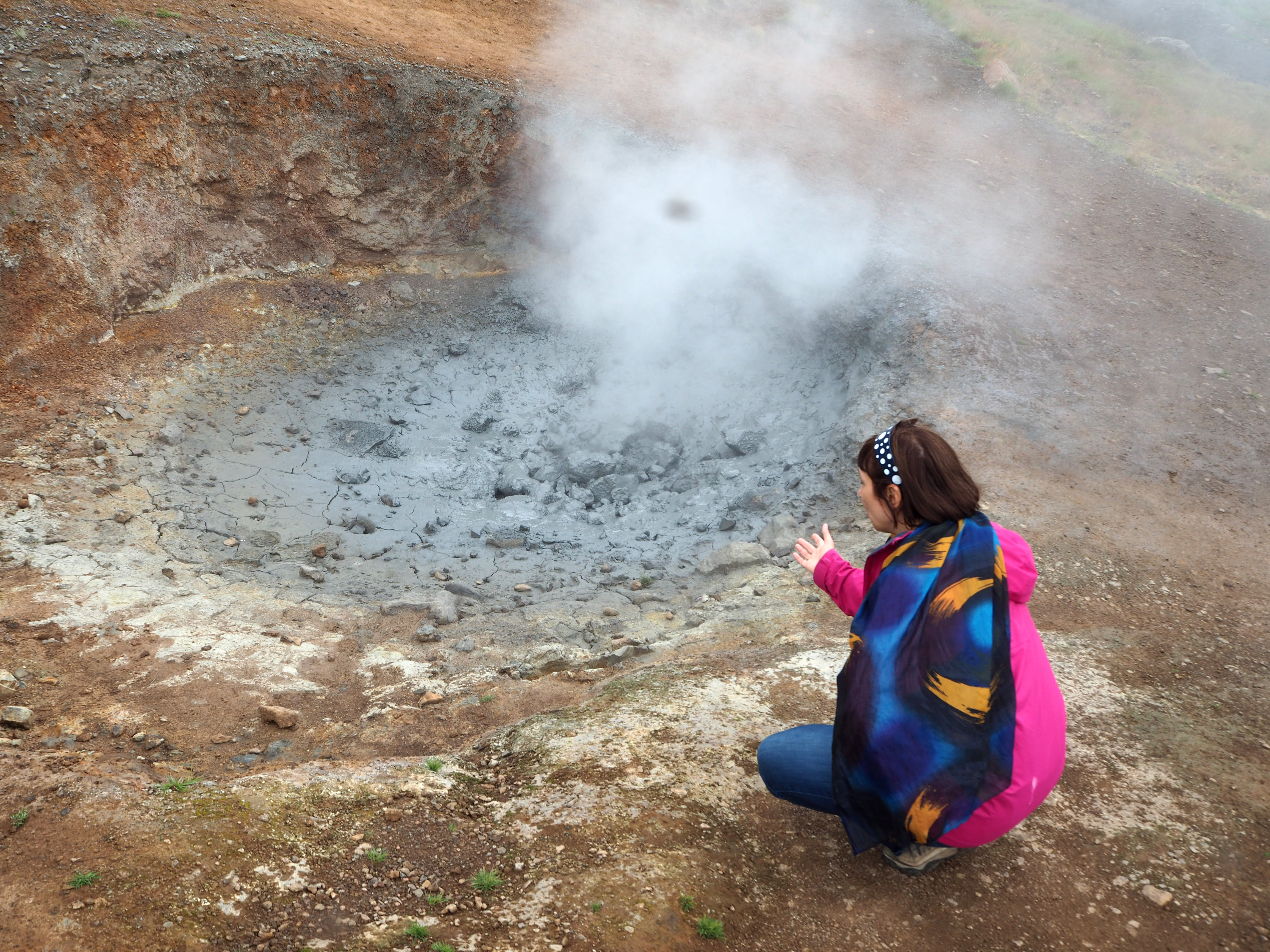
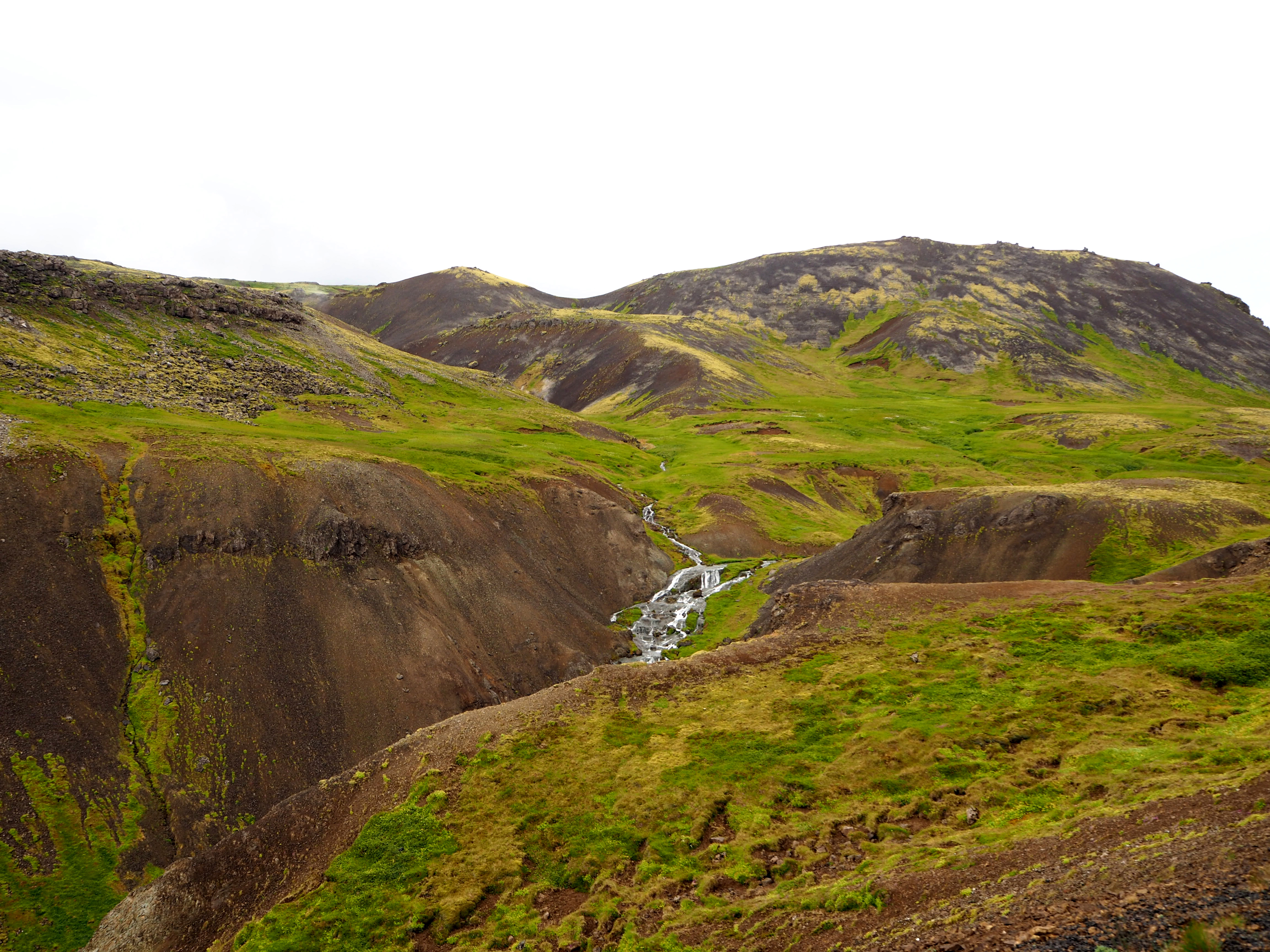
The Reykjadalur valley is only 45 kilometres from Reykjavik, and the name is translated as Valley of Steam. The name is quite fitting. The 45-minute hike to the hot river led us through many steaming vents and several bubbling springs. The hike is a treat, as the path winds through the green steaming hills with a view of some waterfalls. The only negative point was the clouds of midges that flew around us and got into our hair, eyes, noses, and mouths. There are no mosquitoes in Iceland, and the midges don’t bite, but they are pretty annoying. Pieces of advice: a silk scarf can do miracles for covering and protecting yourself.
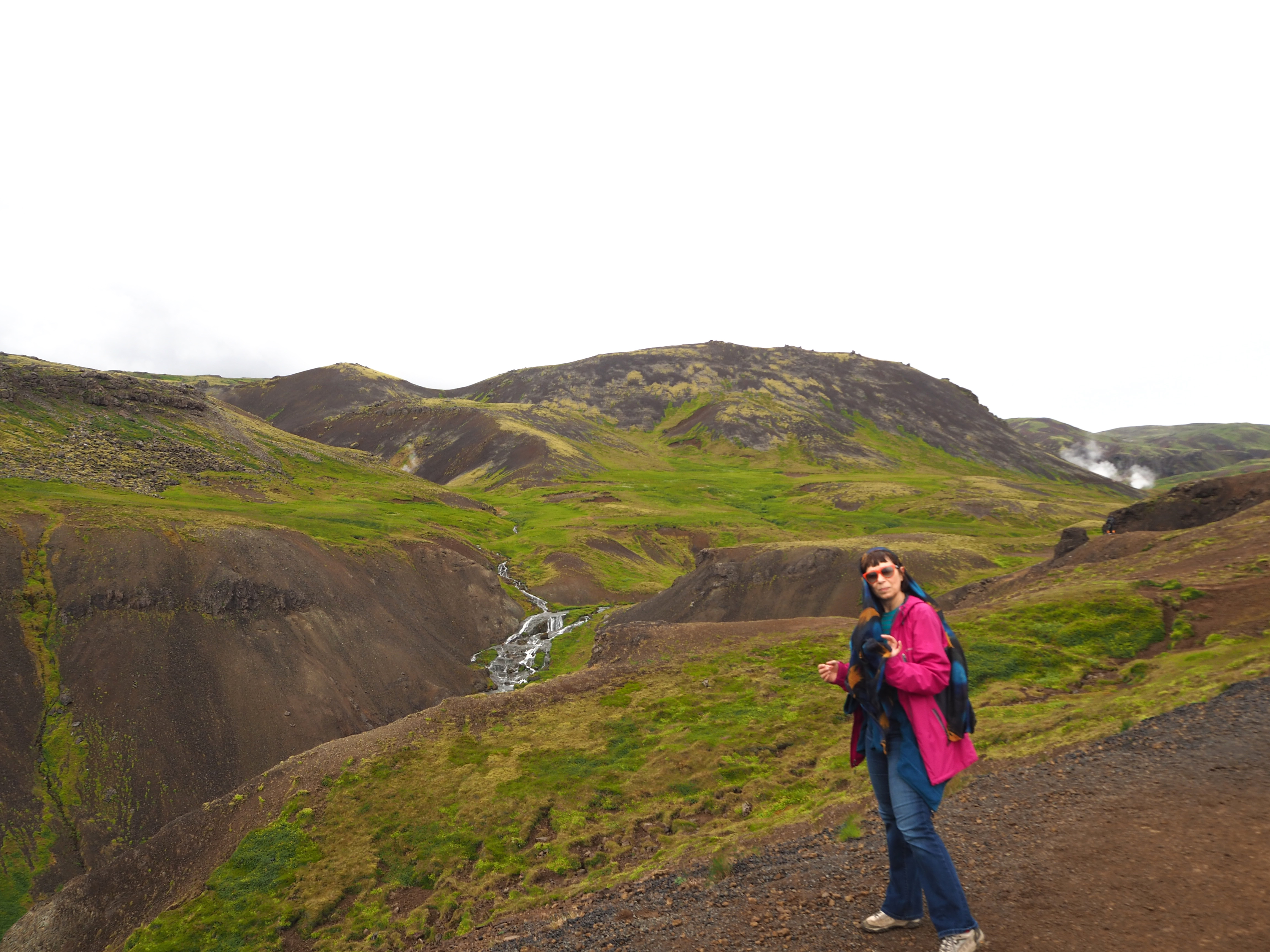
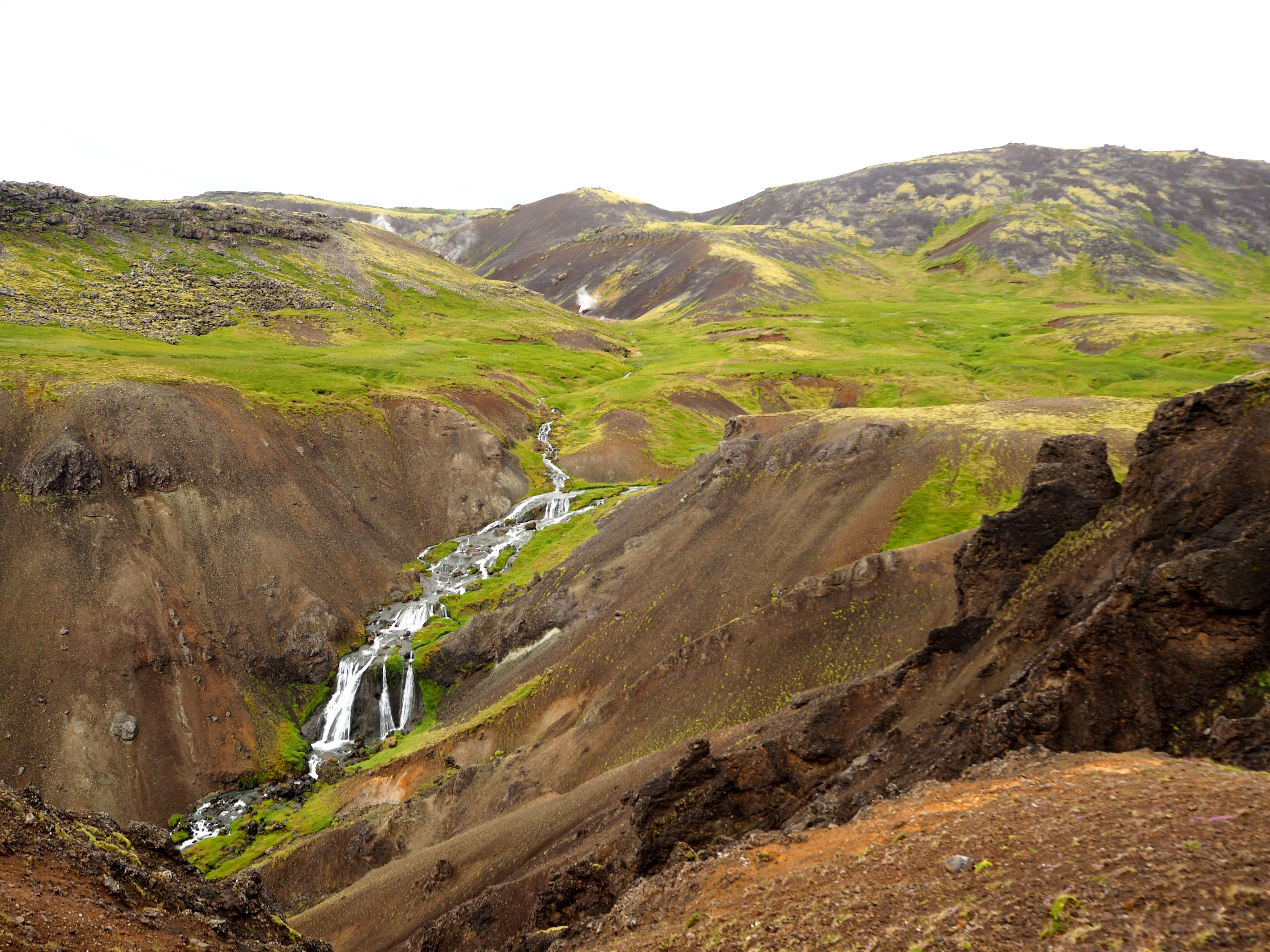
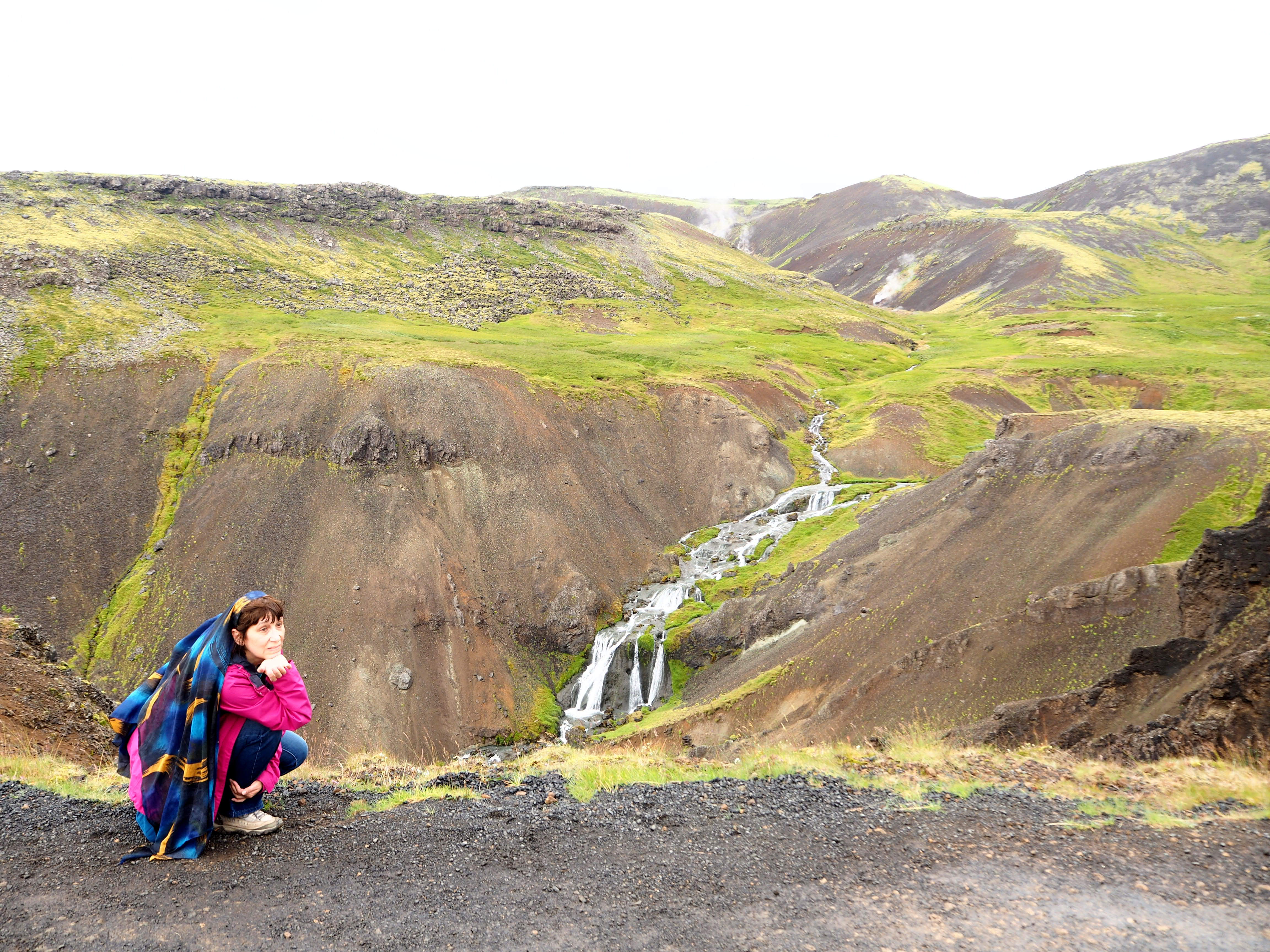
The weather during our hike was overcast, not a surprise for Iceland, and when we finally reached the river, we didn’t stop to look at the beauty around us. We just went into the water. This was not the first time for us to be in a hot spring river. We found and soaked into one in the jungles of Bolivia.
I am not sure which one I liked more. In Bolivia, the air temperature was around 30 Celsius, we had all the hot water for ourselves, and parrots were flying in the rainforest above us. But here, in Reykjadalur valley, we could appreciate the pleasure of dipping into the hot water on a gloomy, overcast day. The river is more like a small creek, and as the hot geothermal water meets the cold water of the river, it forms many pools with varying temperatures. It is easy to find the perfect spot by alternating your location up and down the river. As you can guess – I went to the hottest place, as Ivan tended to stay in a little bit colder zone.
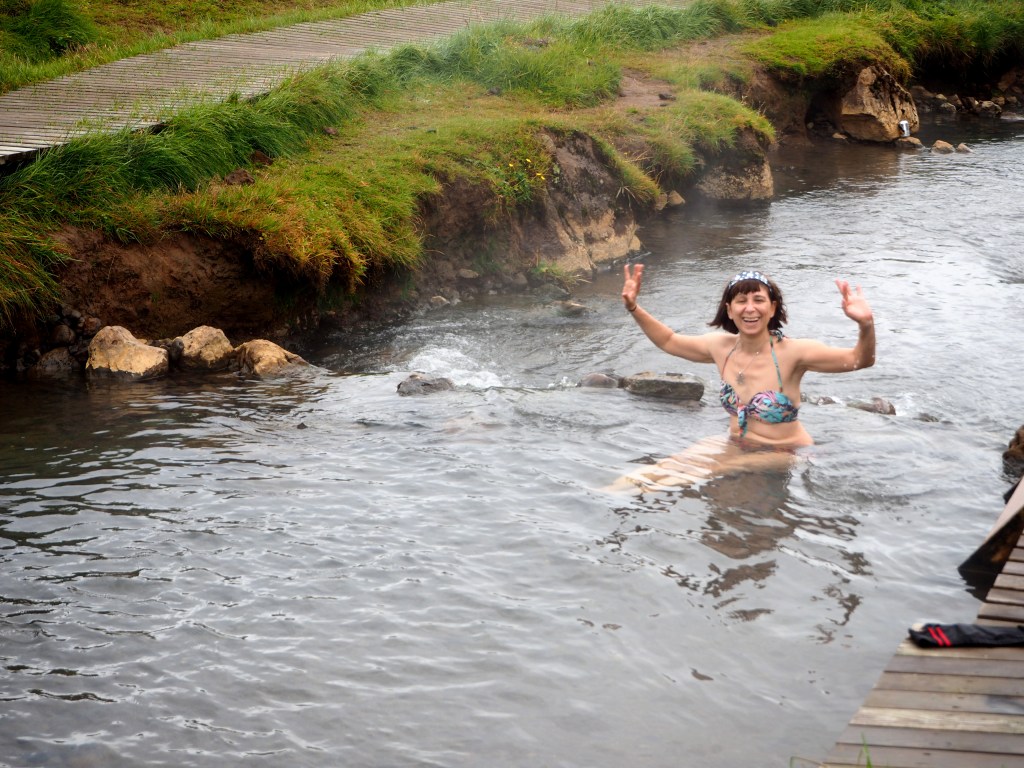
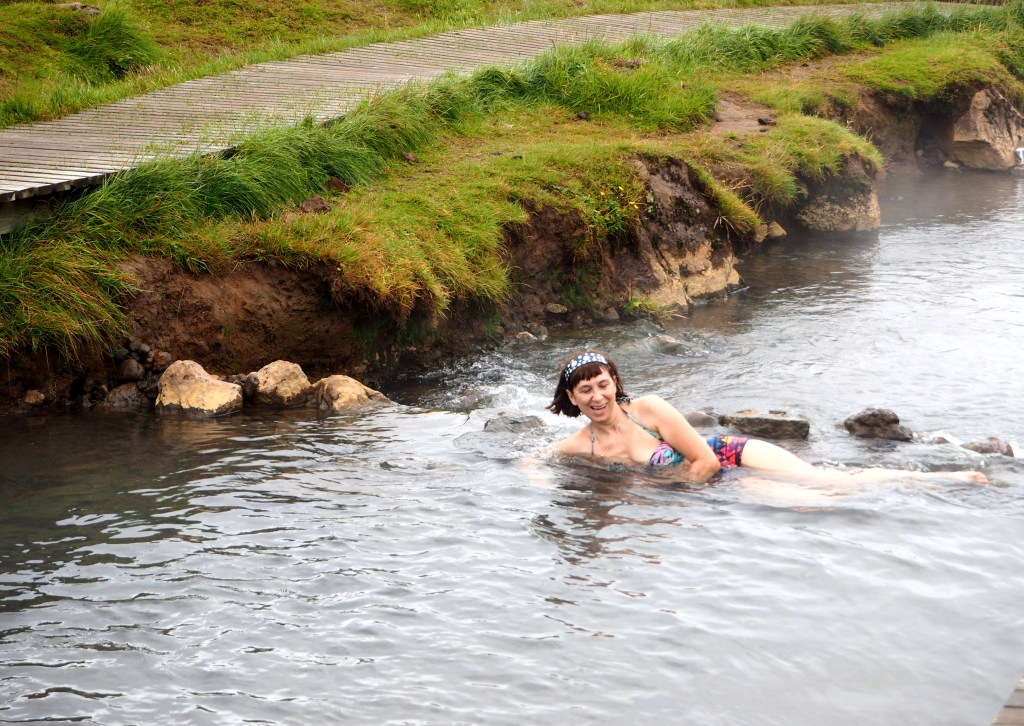
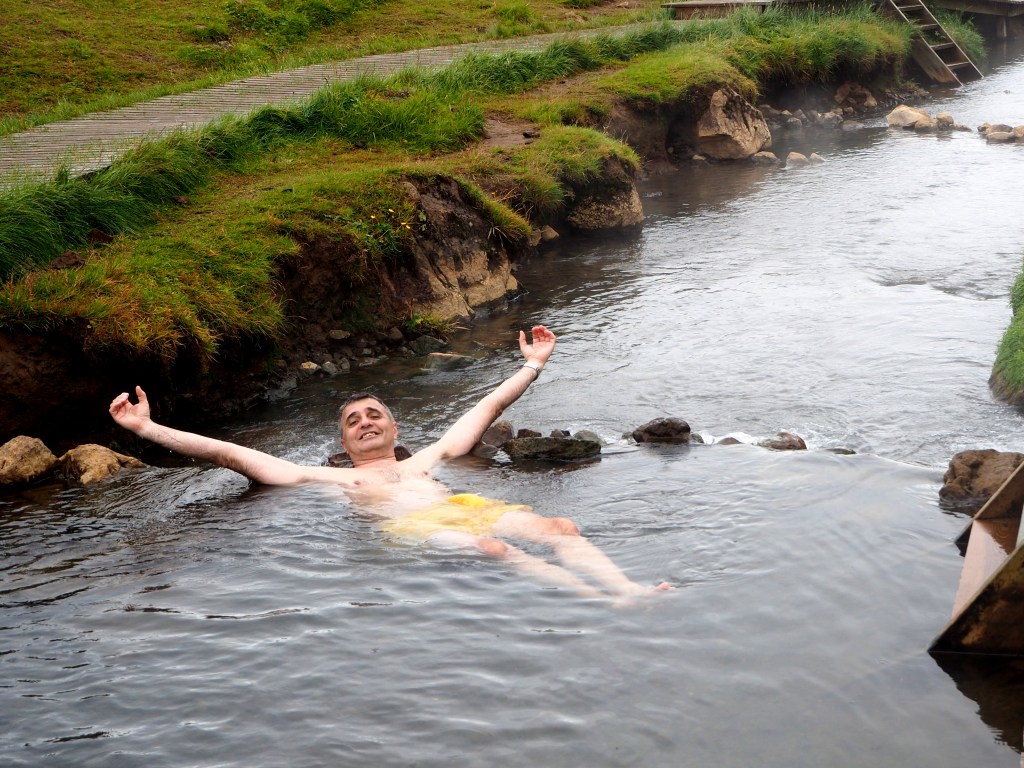
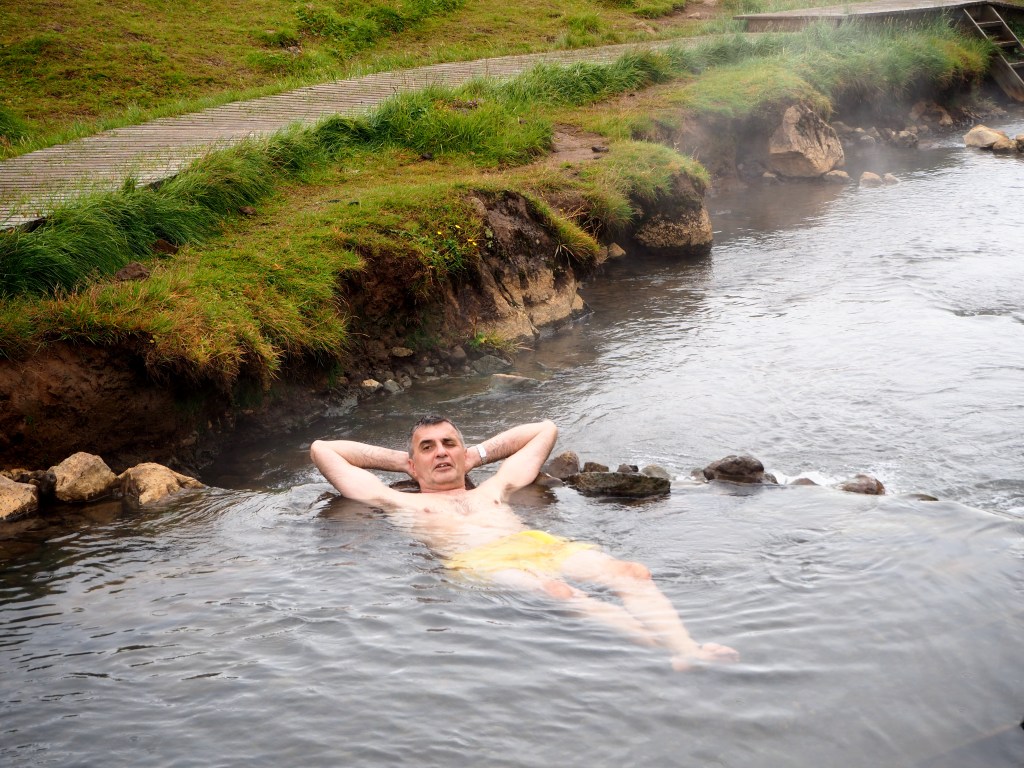
Not many things could compare to the feeling after a long soak in thermal water. My body felt just weightless, and that night, I slept as peacefully as a newborn. If we need to move to a new country, I will be looking for a place with many hot springs within driving distance.
We continued exploring Iceland and, on our way toward the Hofn, stopped at Hoffell Hot Tubs. Unfortunately, when we arrived, they were so crowded that we decided against dipping into them.
But the next day, I found my paradise at Djúpavogskörin thermal bath.
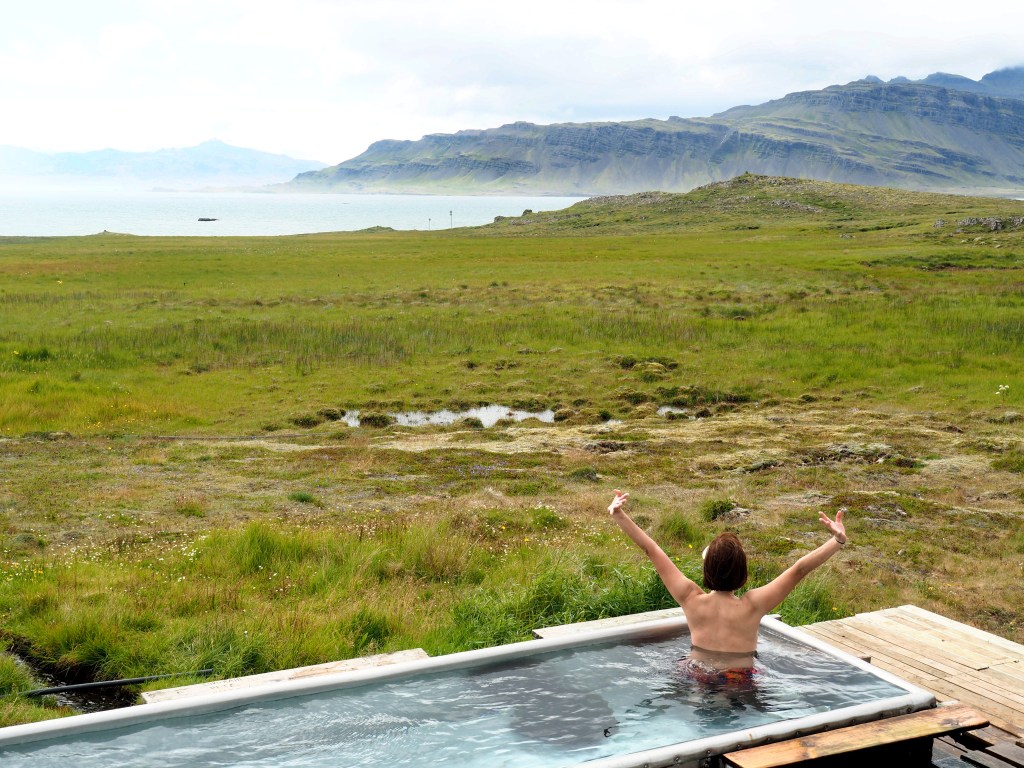
The thermal bath is a grand name for the place we found. I don’t know who came up with the idea of pouring hot water coming naturally from the ground into a stainless-steel tub in the middle of nowhere, but the result was extraordinary.
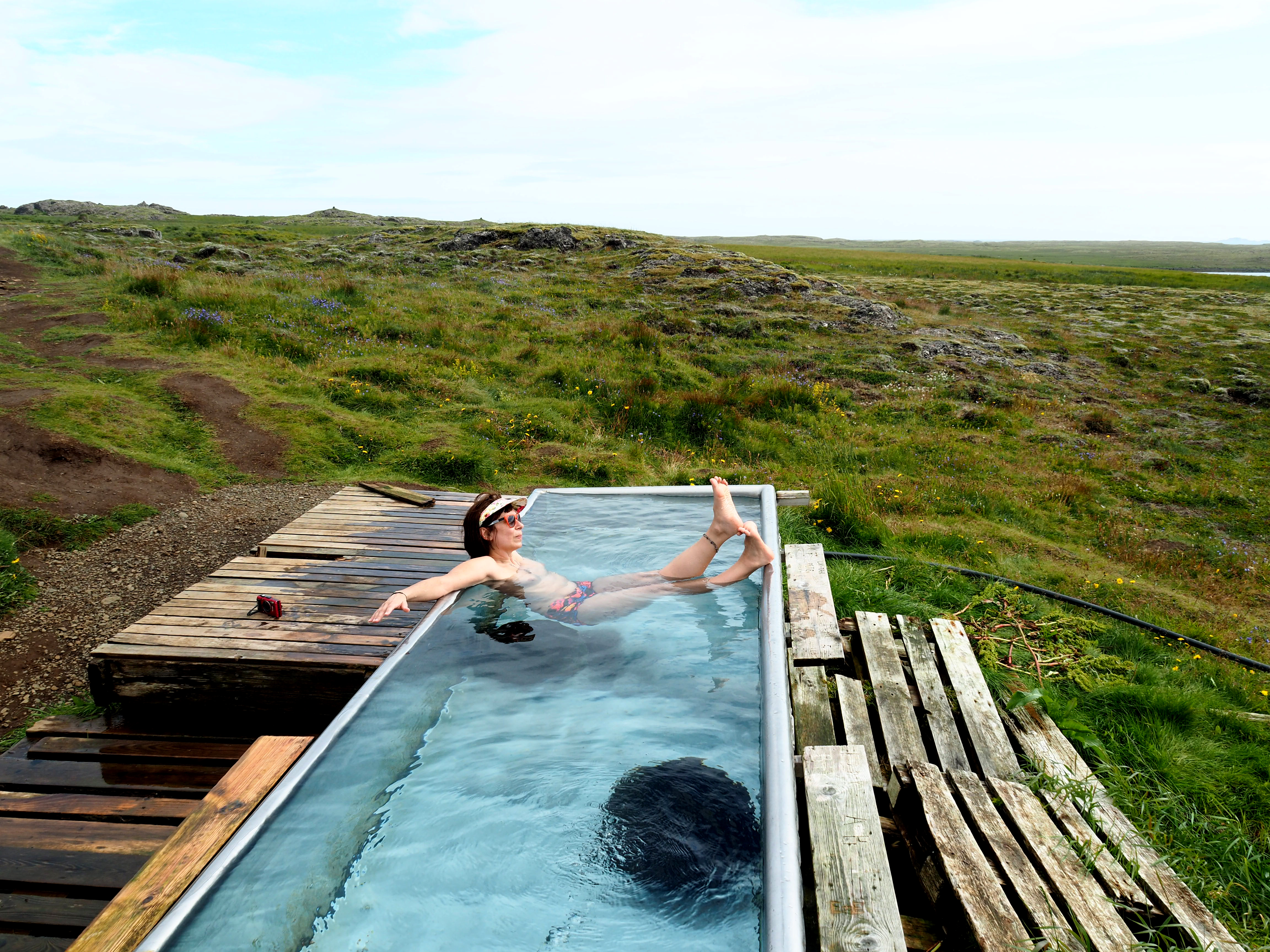


The scenery is vast and beautiful, and you can experience this unparalleled beauty for free. There were the two of us in the tub, and no one to be seen for miles. We spent almost two hours there, soaking with the view of the mountain at the back and the ocean in the other direction. The water was hot, around 40 to 42 degrees, but with a veil of raindrops on our faces, it was perfect.
That was one of the best experiences so far. Authentic. Free. Beautiful. Not many attractions can’t beat it. It was everything we needed for the morning before we started exploring Iceland and hiking to Litlanesfoss waterfall.
But as you can guess, even the warm, soaked deep into our bones, wears out after two gloomy days hunting for puffins with our cameras on the windy hills of Iceland. So, we decided to check out the Vök baths – Iceland’s only floating infinity pools on the banks of beautiful Lake Urriðavatn.
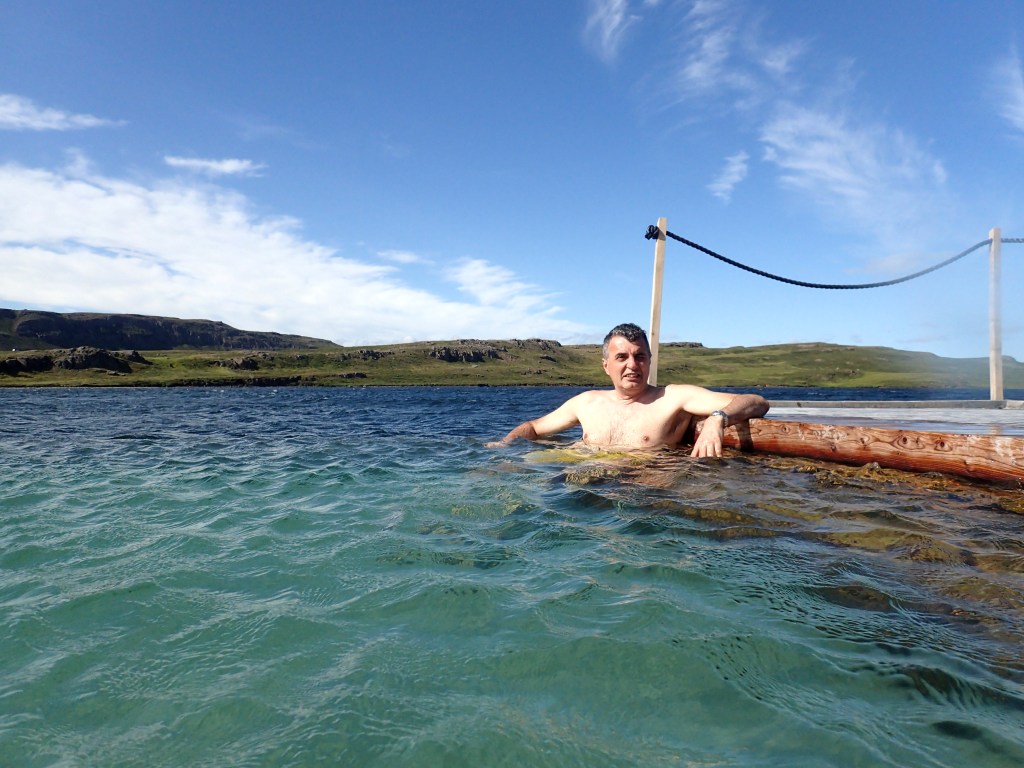
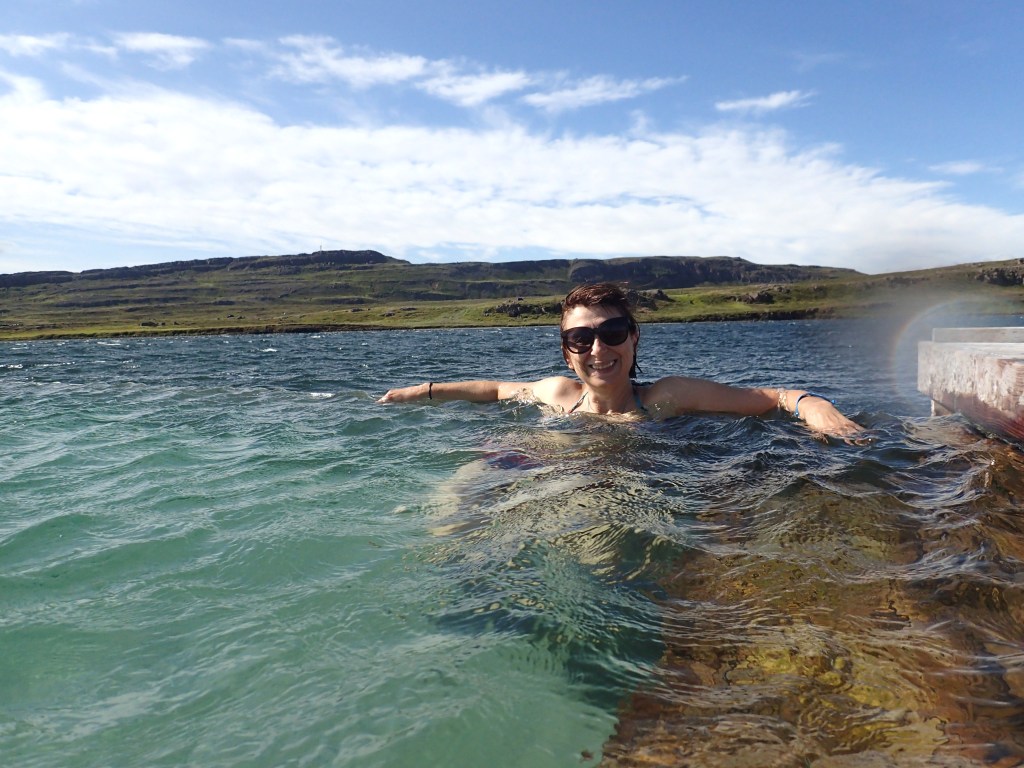
It was an absolutely different experience than the Djúpavogskörin. The baths were civilized, with a beautiful building, pristine changing rooms, several pools with different temperatures, and access to a pool bar. There is a path to two floating pools. They both have infinity edges, and you can soak in hot water only centimetres away from the freezing water of Lake Urriðavatn. And yes, you can jump and swim in the cold lake waters. And yes, Ivan did it. And no – I didn’t. Just dipping my hand and my feet was enough. Let’s put it this way: you can always take a cold shower at home, but it is not easy to find mineral-rich, geothermal hot spring pools, so no, thank you. I really decided to stay put.
Ivan: Well, I jumped trying to catch the mermaid on the left, but missed.
Marinela: Unfortunately, not all hot springs places are accessible for soaking. This is the case with Grjotagja cave, which became famous for the heated Game of Thrones scene between Jon Snow and Ygritte.

It is a small lava cave near Lake Mývatn with a hot pool. After a disturbance in the 70s, the water in the pool became too hot for bathing. With the popularity after the famous love scene, the cave was flooded with tourists and dipping in the water is forbidden. Still, it is a fantastic place to visit and enjoy the magic aura surrounding it.
We also found an endless shower – the hot Krafla shower.
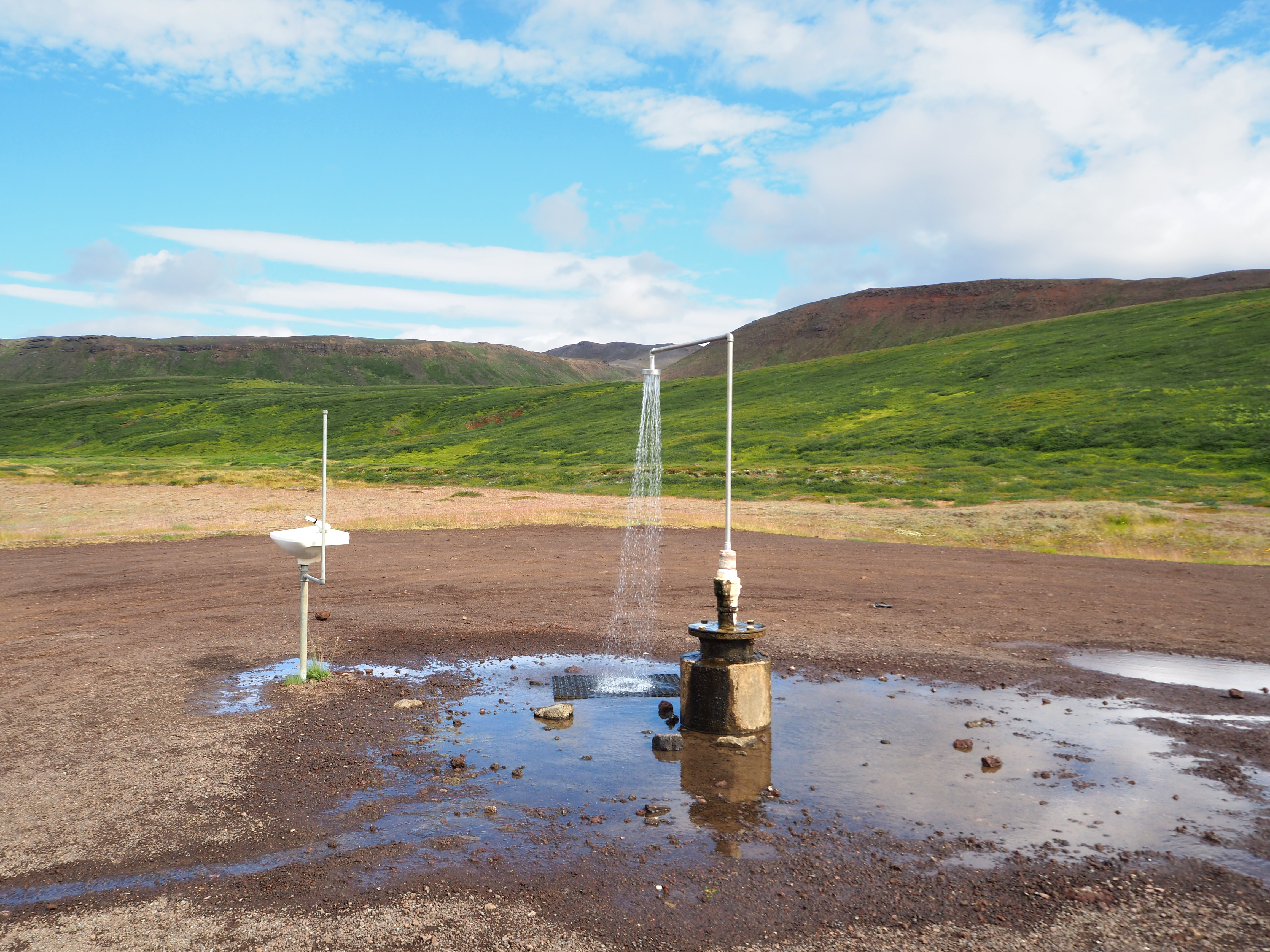
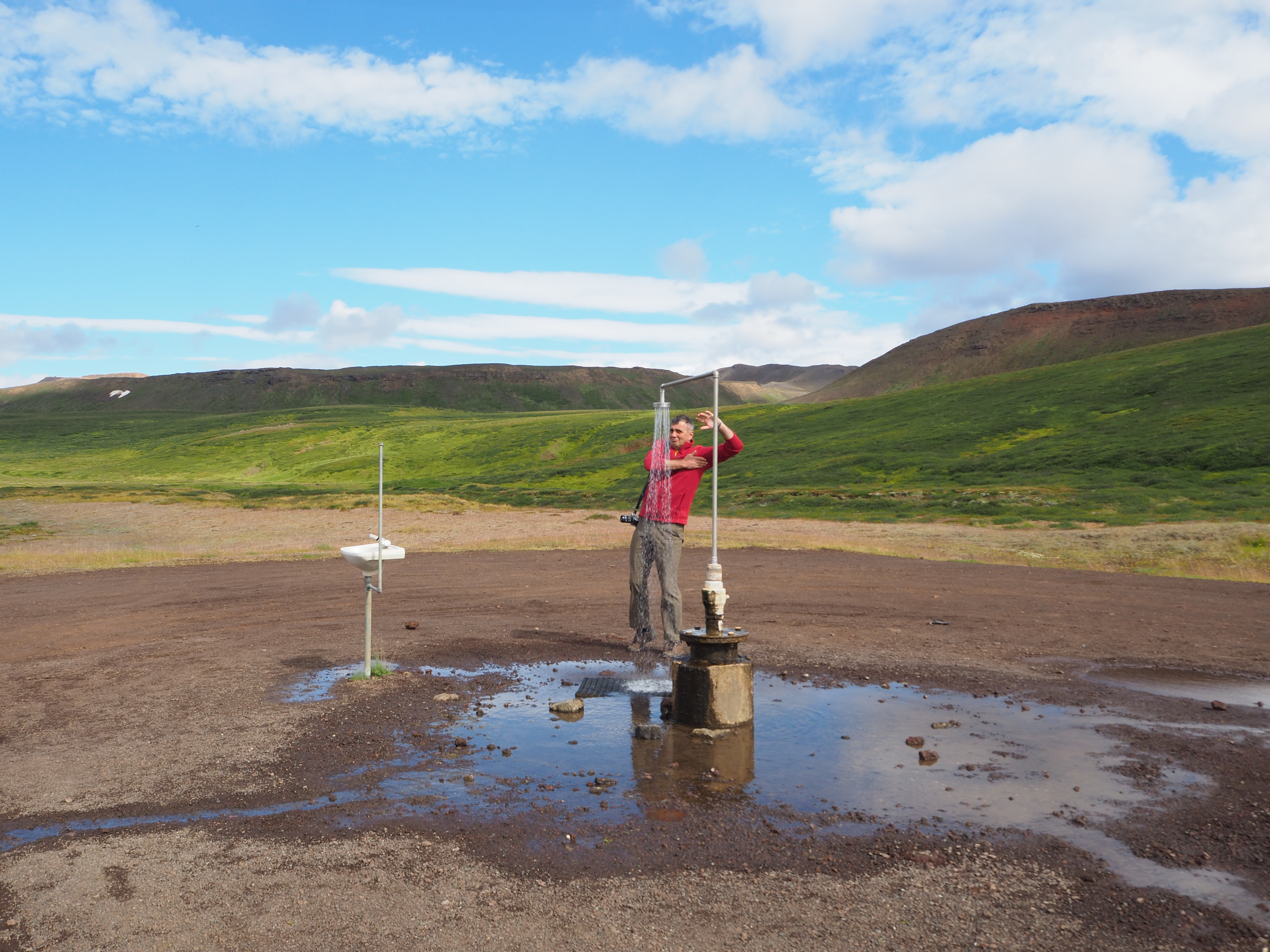
It is in the middle of nowhere on the way to Krafla Crater Lake. According to Google reviews, it “appeared in 2011, installed in mysterious circumstances by persons unknown on a geothermal water pressure relief vent “. It is a perfect place to shower if you are camping in the area.
Our last soak was at Drangsnes Hot Tubs in Northern Iceland. It is one of Iceland’s hidden gems, offering a variety of temperatures and a nice view of the Northern Sea. It is lovely to soak in these hot tubs by the sea, and when we visited them in 2020, they were not crowded. The sea was very rough and stormy, and looking at the waves from the hot pool was quite lovely.
Puffins:
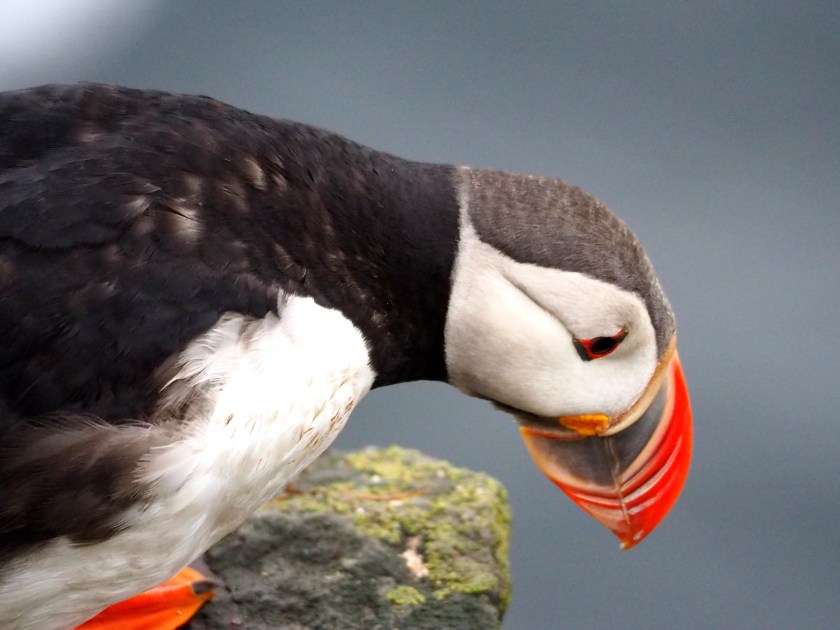
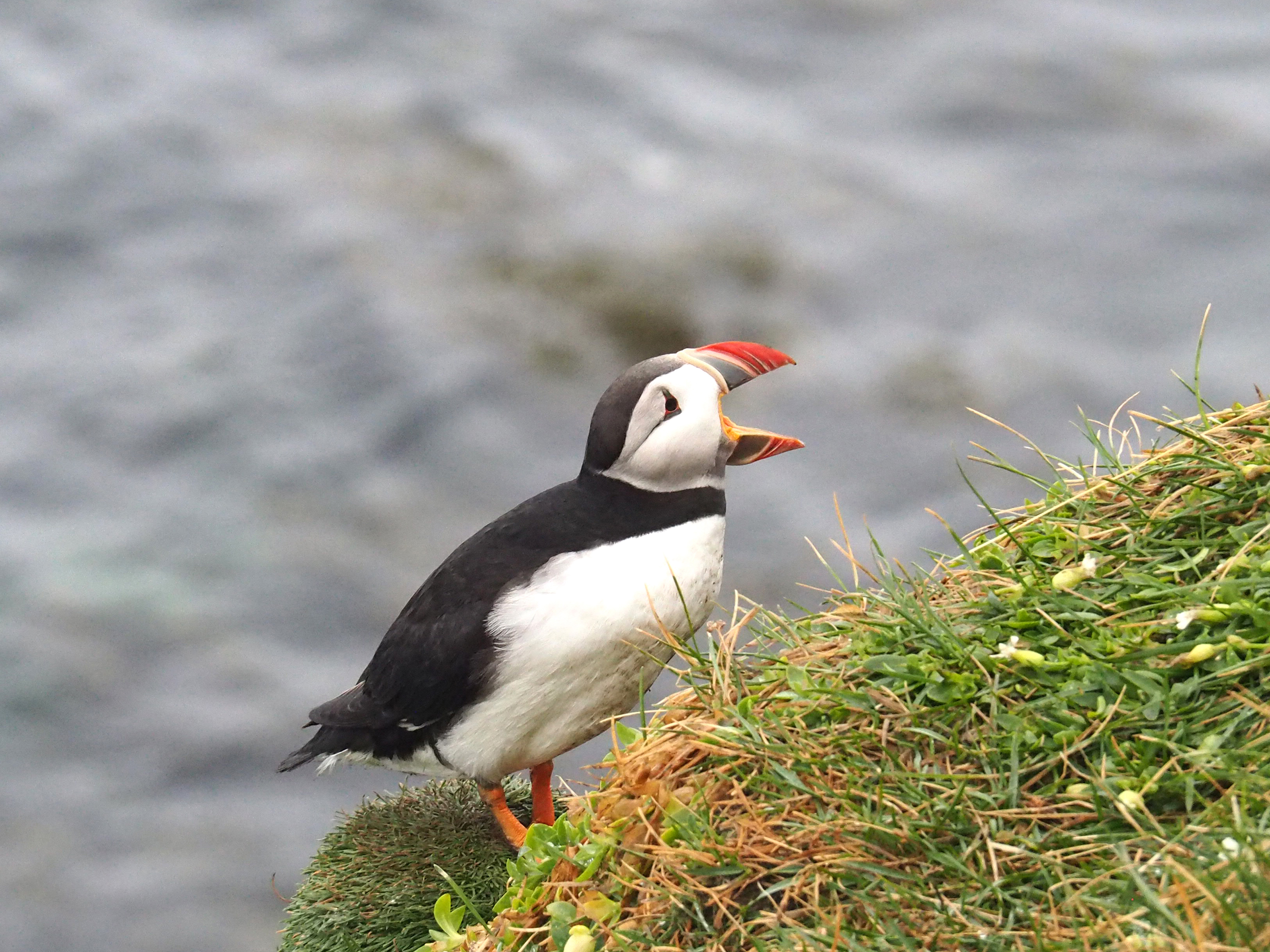
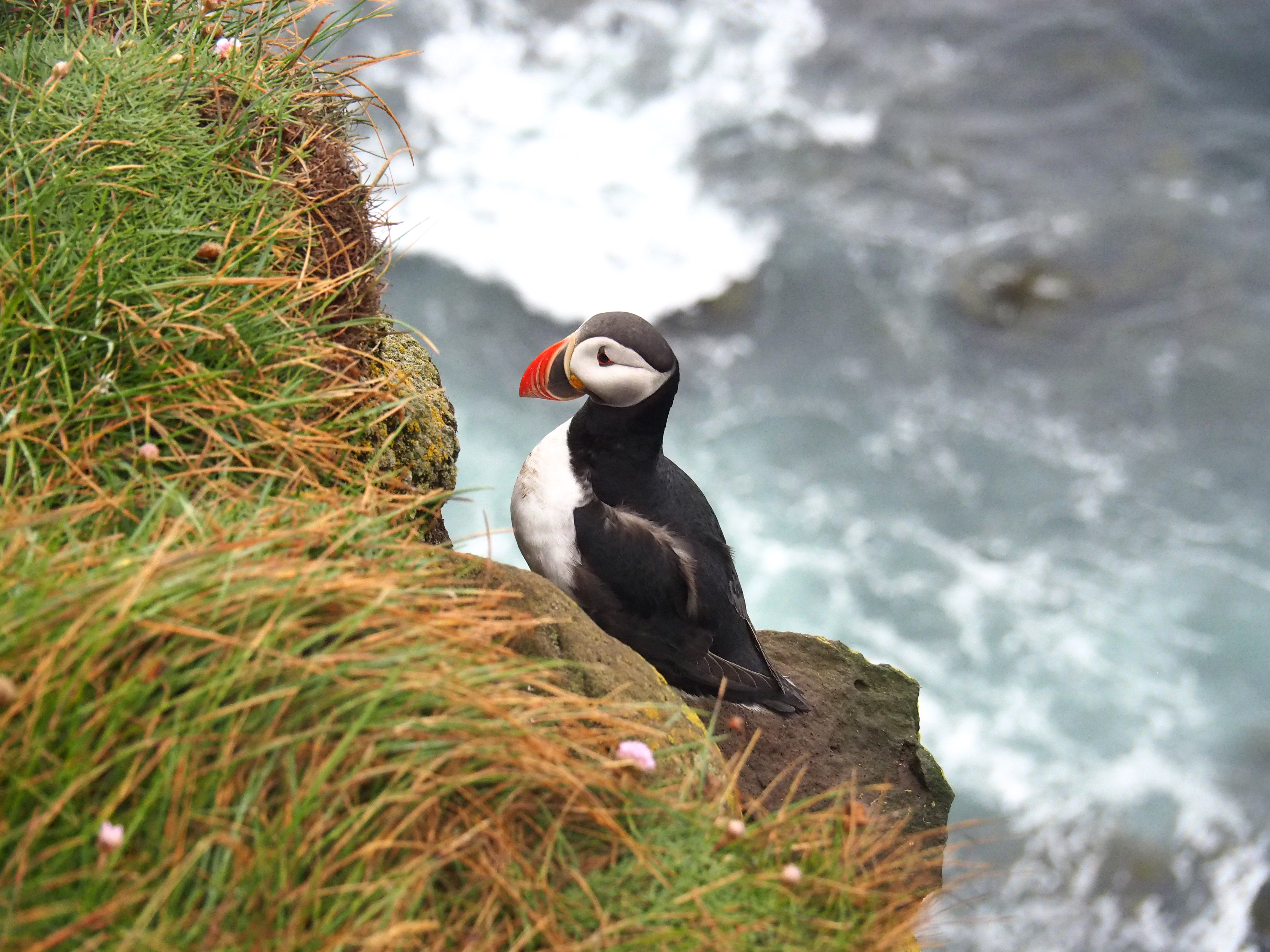
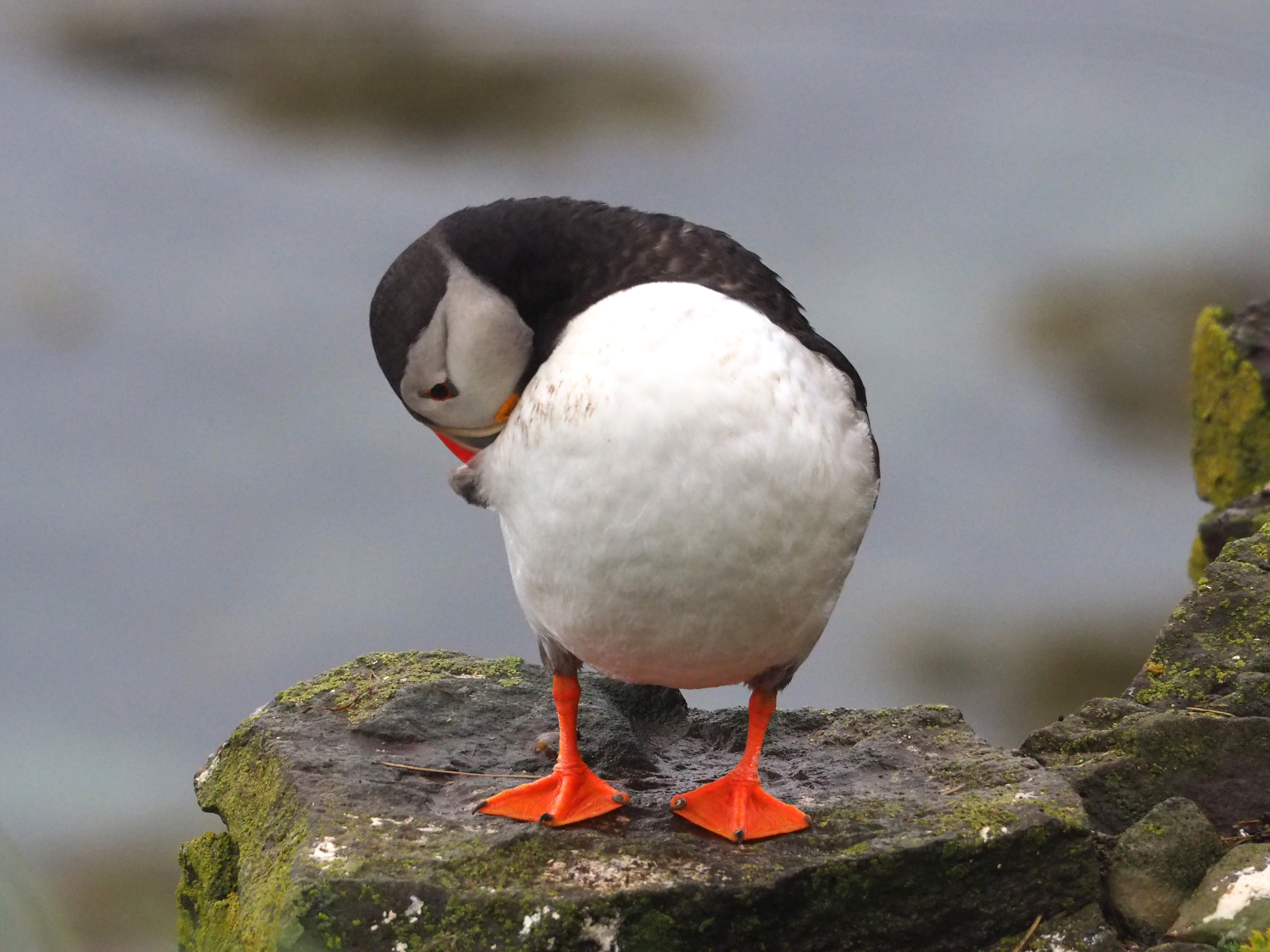
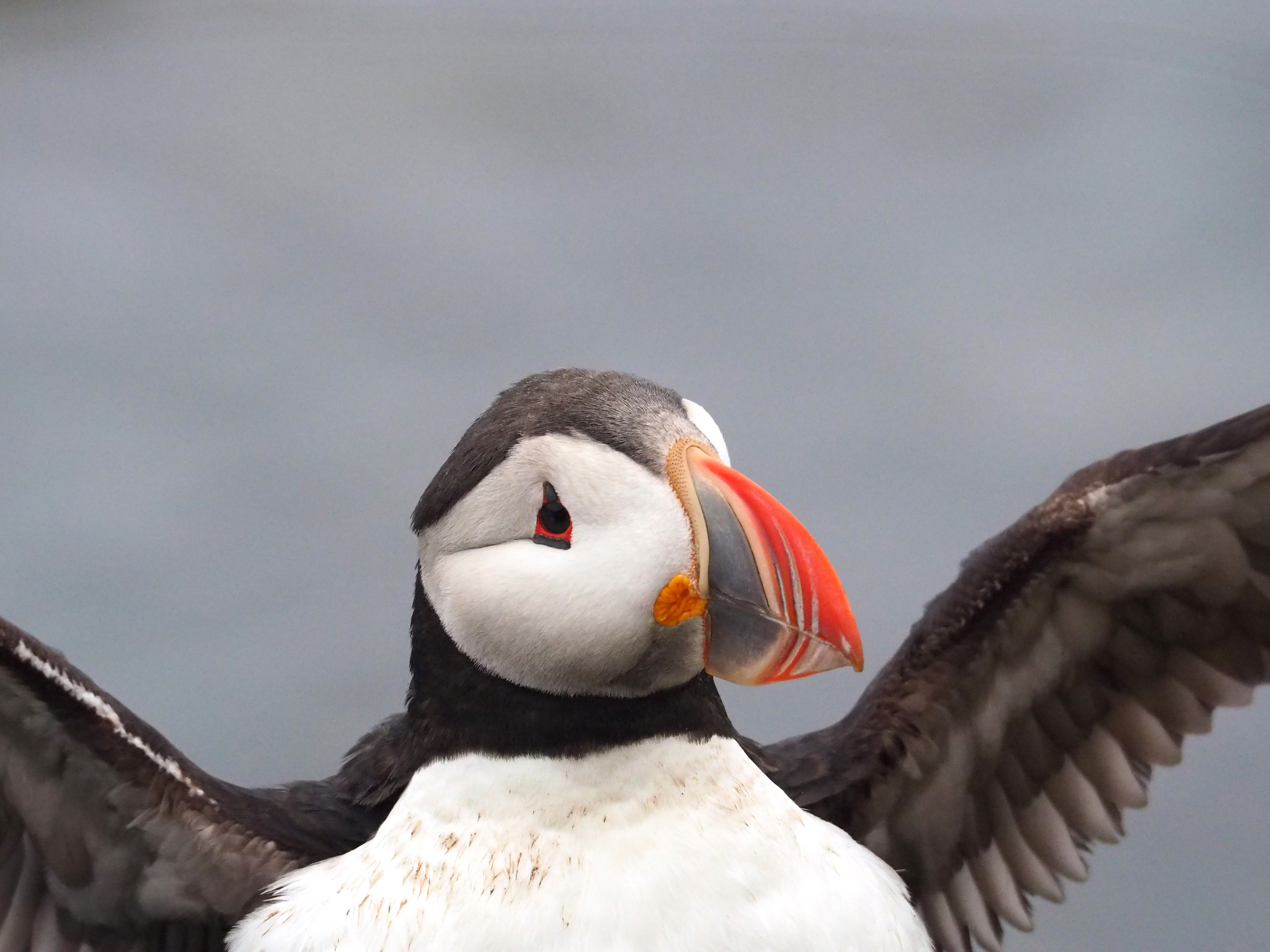
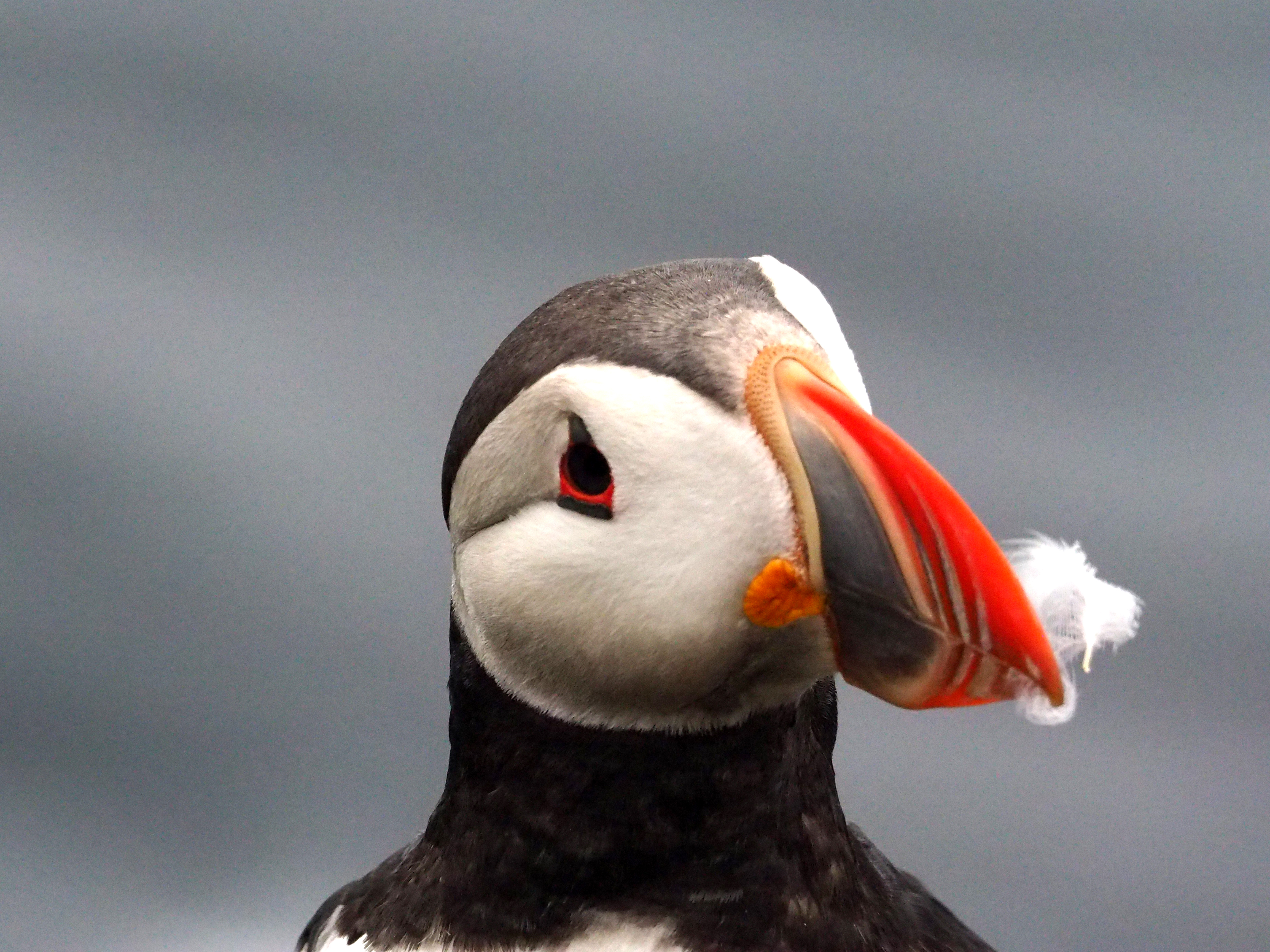
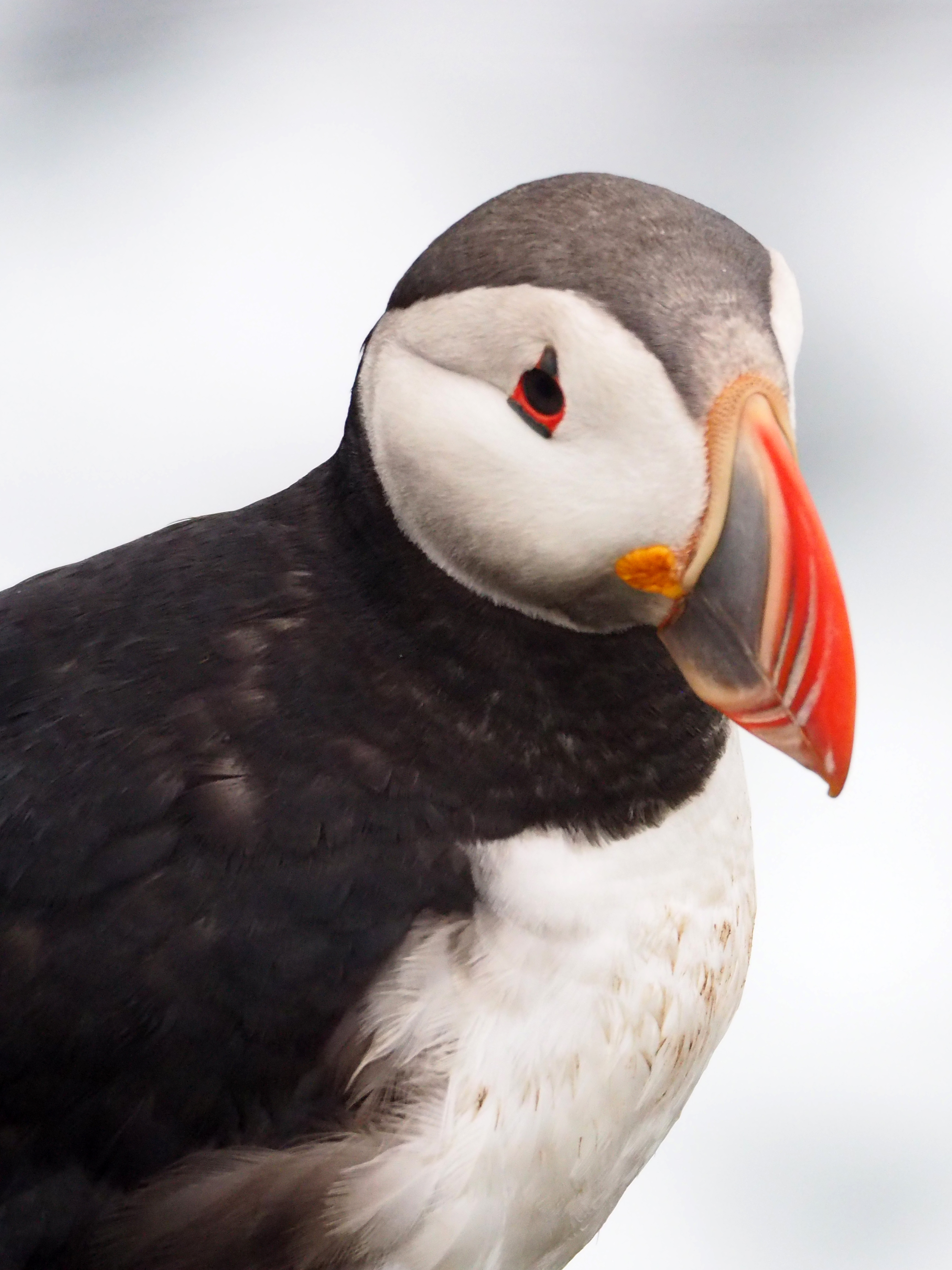
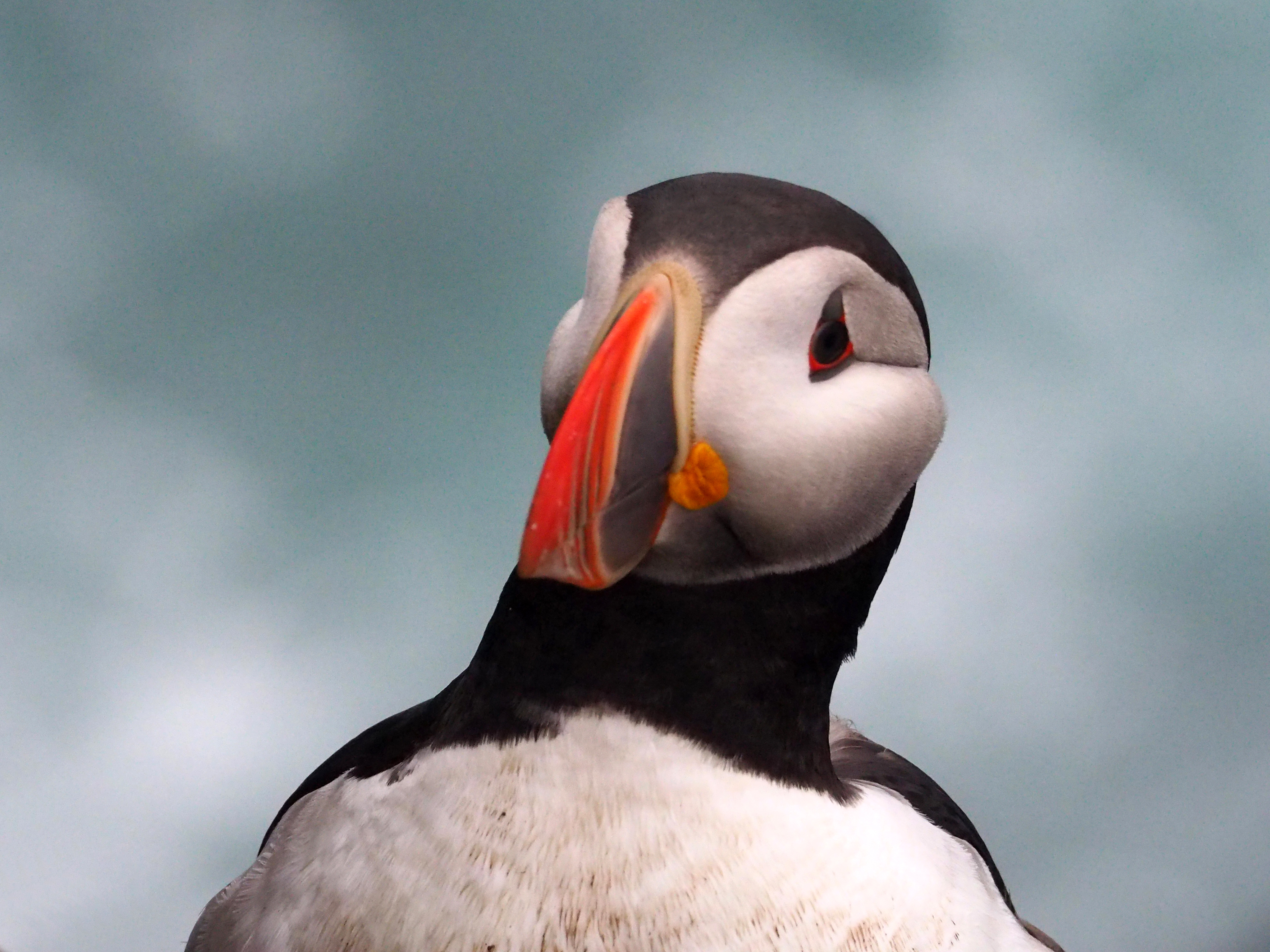
Who doesn’t adore puffins? They resemble cuddly toys that you can snuggle up with in bed. However, after my encounter with other adorable-looking birds like penguins and baby albatrosses, I can’t help but notice that they have a fishy smell.
Iceland proudly holds the title of Europe’s puffin-watching capital, and capturing remarkable pictures of these charismatic birds was an absolute must for us.
Our first stop at puffin hunting was at the black sand beach near Vic. It is a top-rated tourist stop, but the cliffs above the beach and basalt columns are the home of a tiny breeding colony of birds. They are relatively far from the ground, and you need a good lens to take pictures.

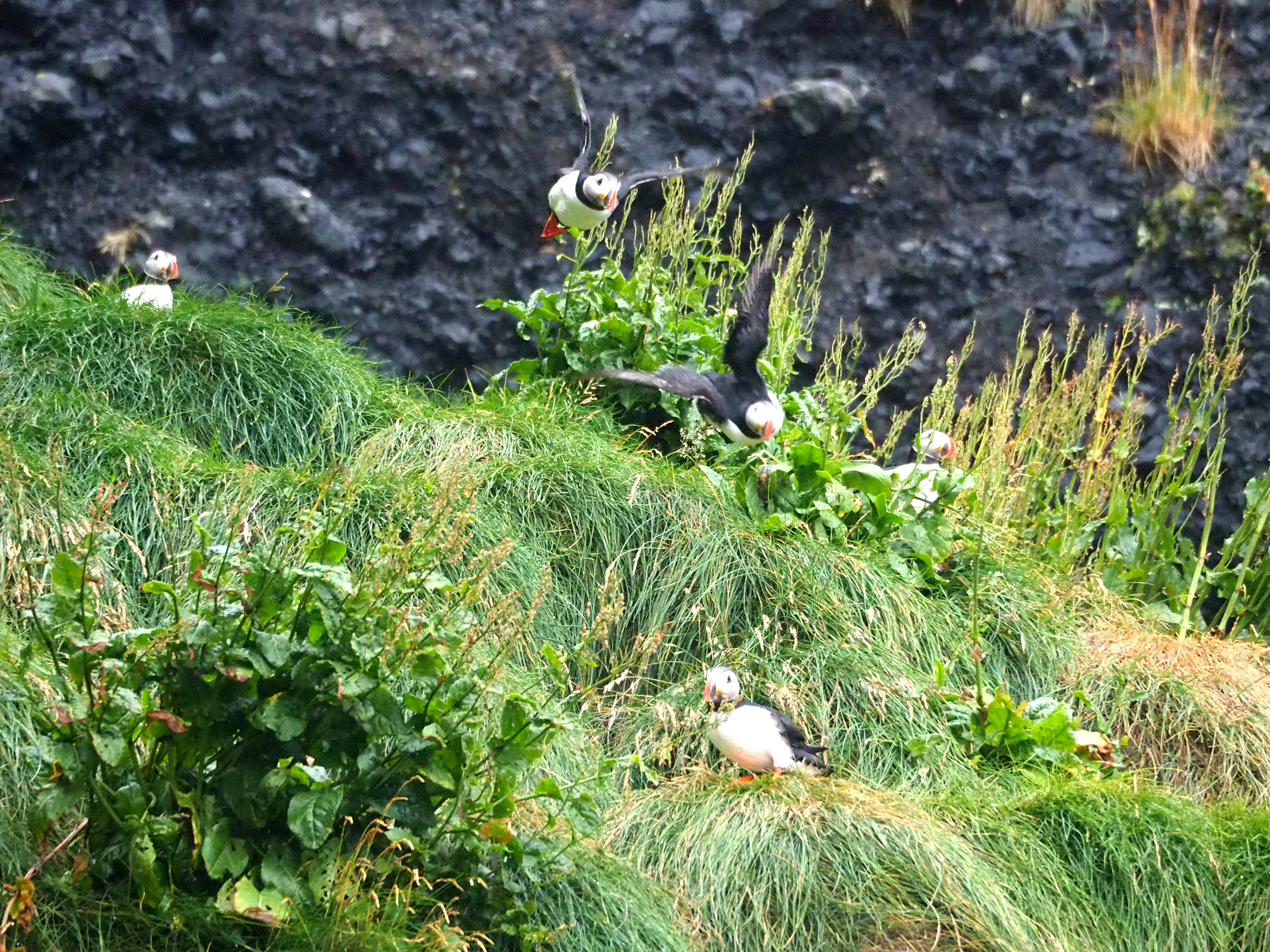


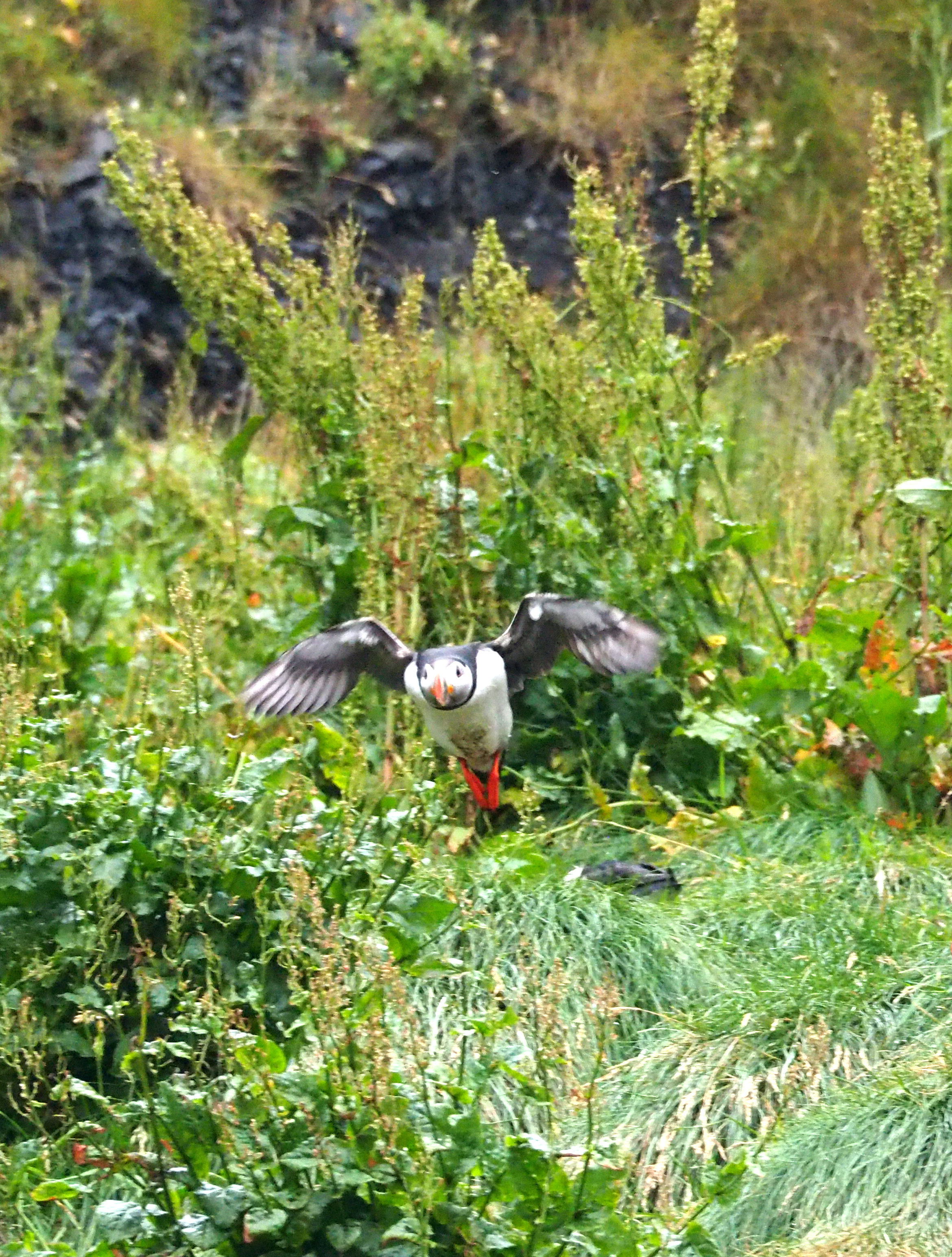

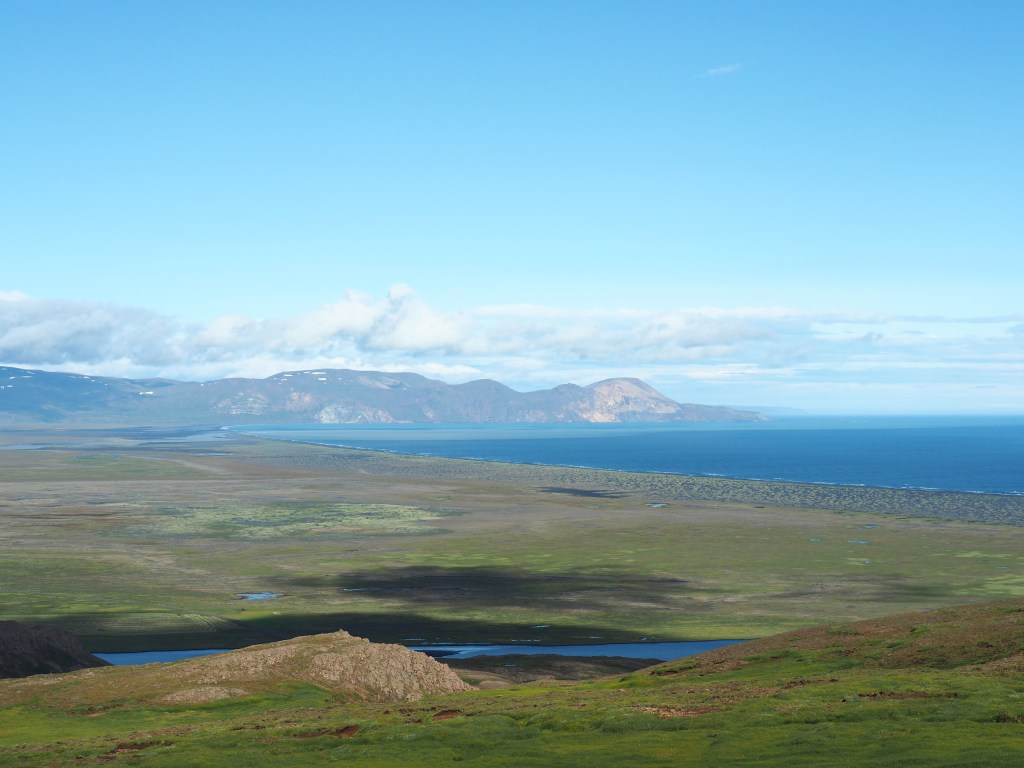
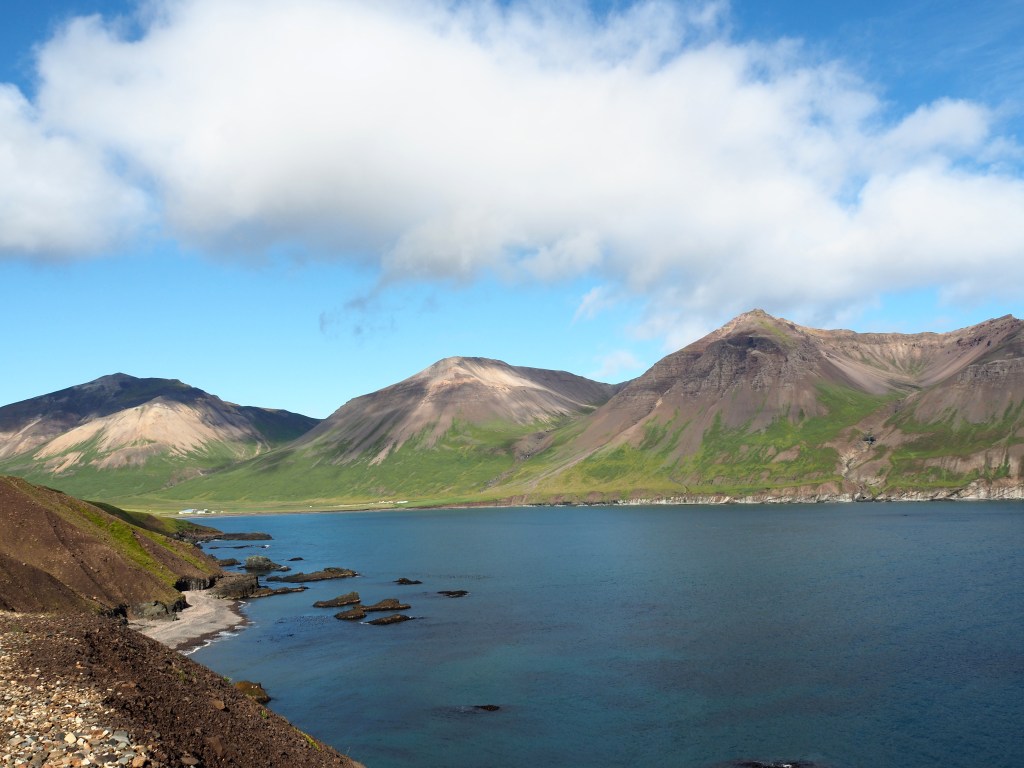
According to my research, nearly 10,000 pairs of puffins nest every summer in Borgarfjörður. This is a fiord in east Iceland, away from the significant tourist flocks. It is not a surprise that we decided to spend a few days at this location. The drive has other benefits. The drive to Borgarfjörður Eystri is on a curling road around the fiord, and if you are lucky to have a sunny day, green and blue are a real treat for the eye.

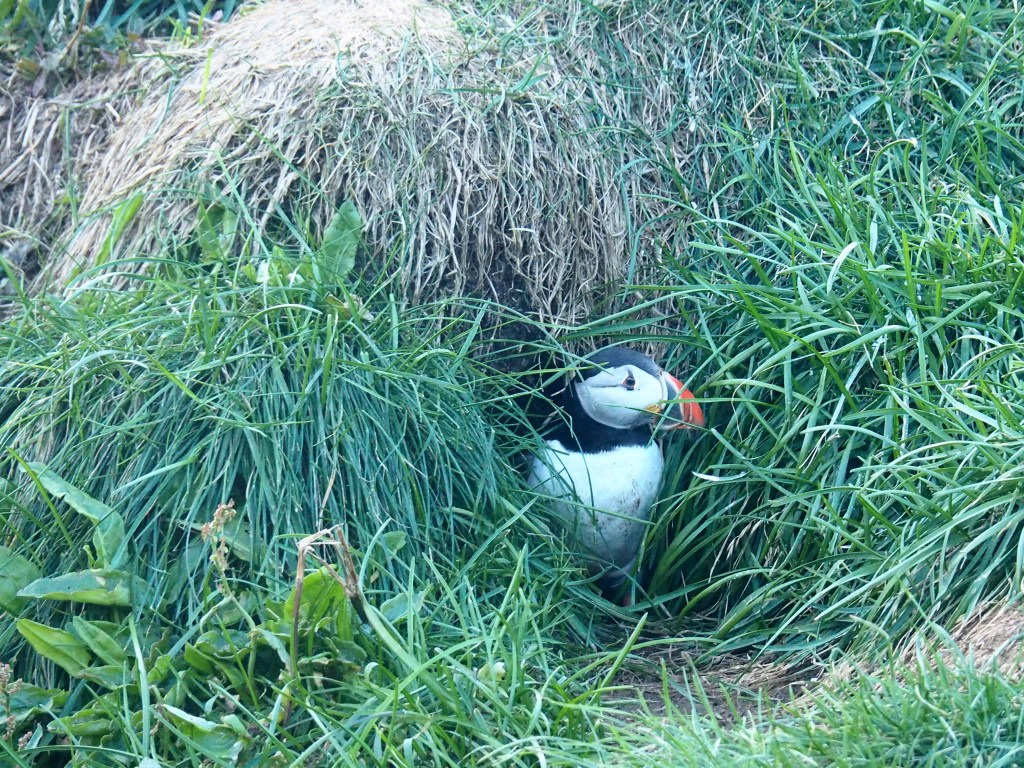
We were rewarded with many close encounters with the lovely colorful birds, as well as with ducks and gulls.
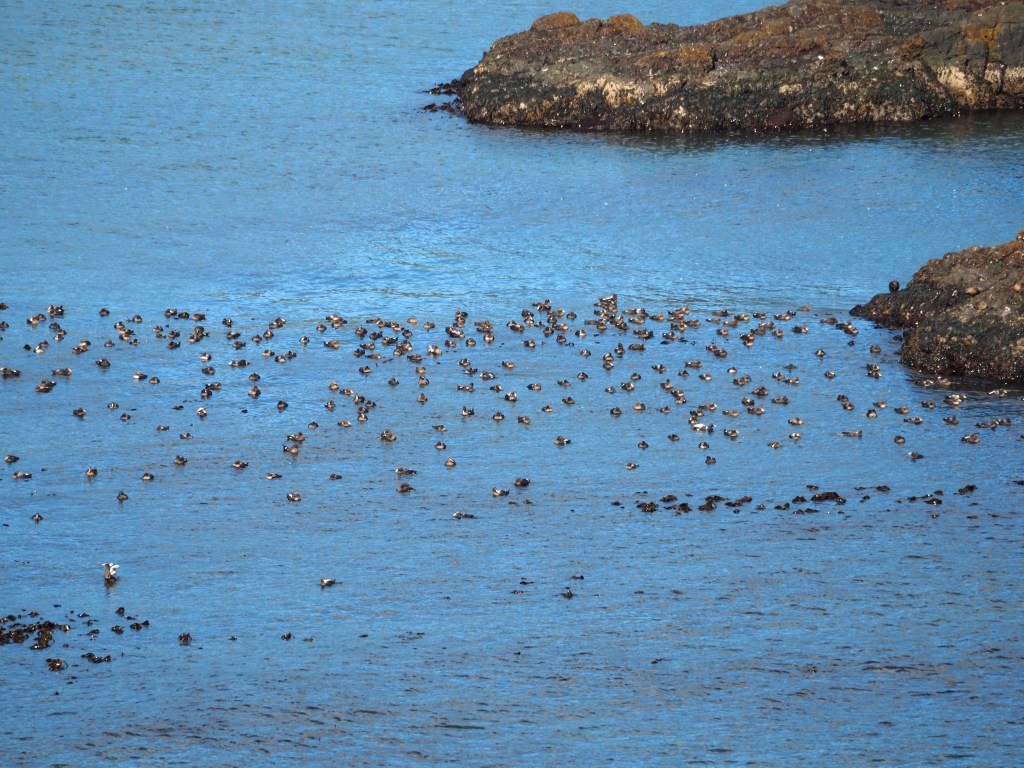
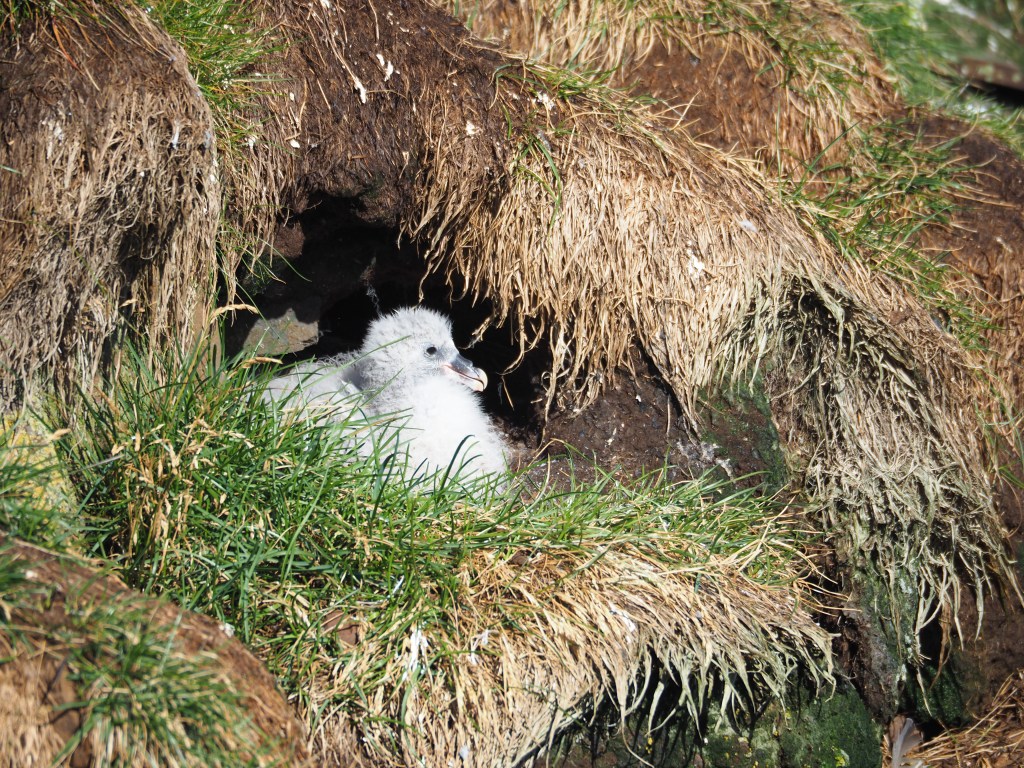
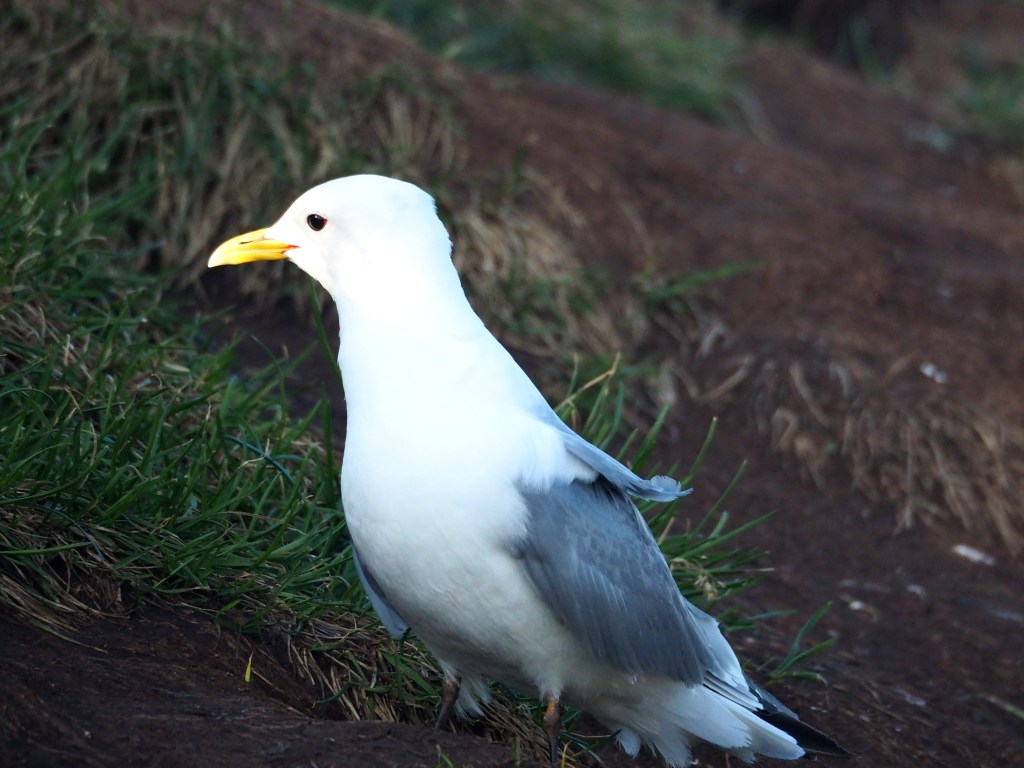
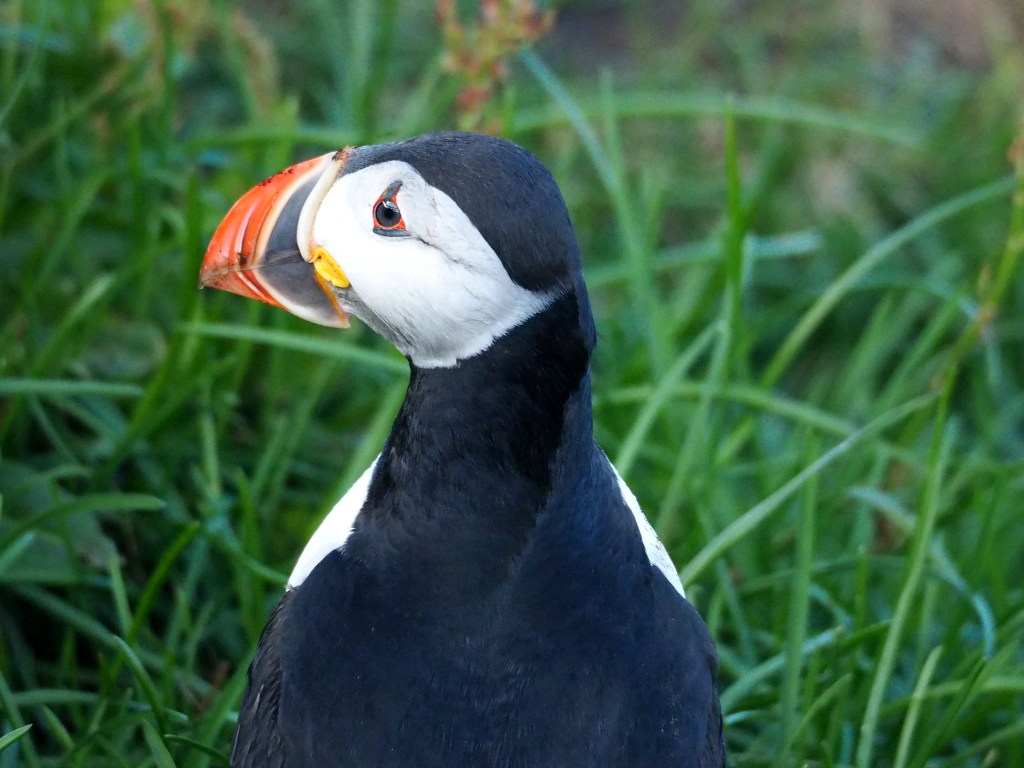
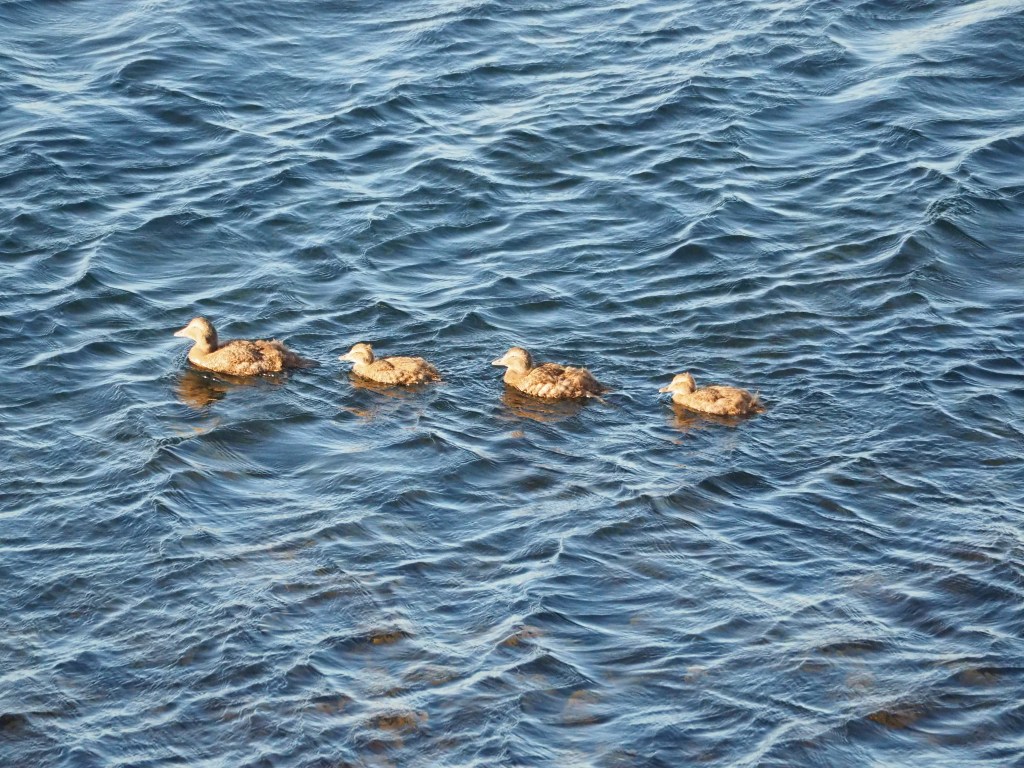
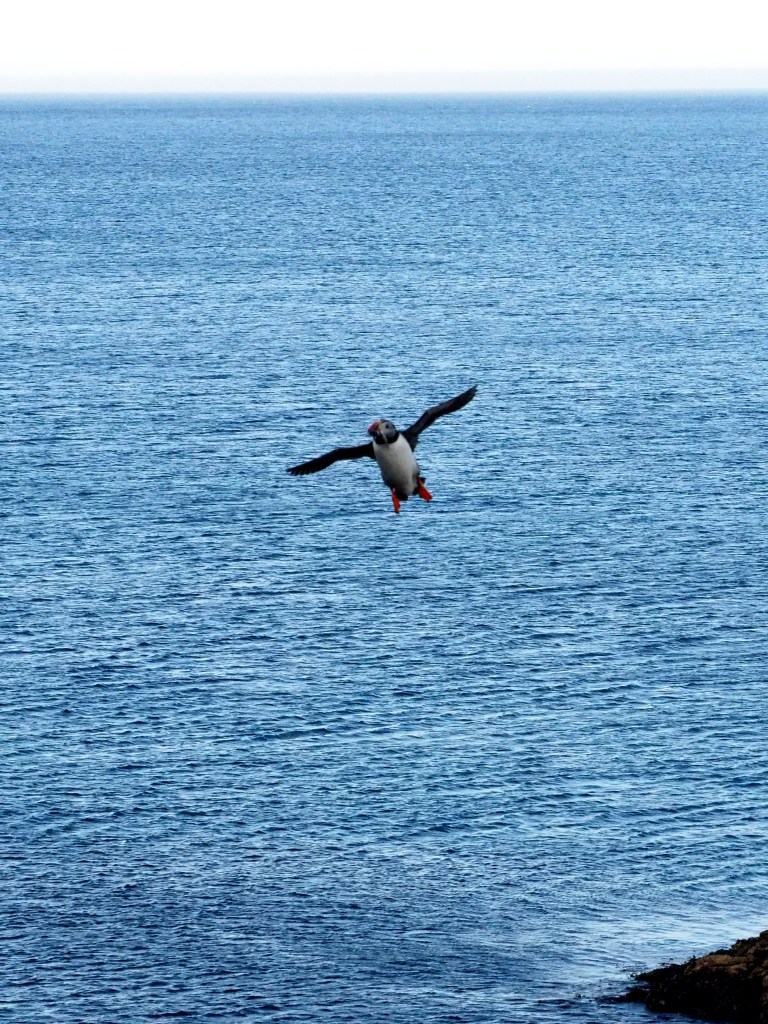
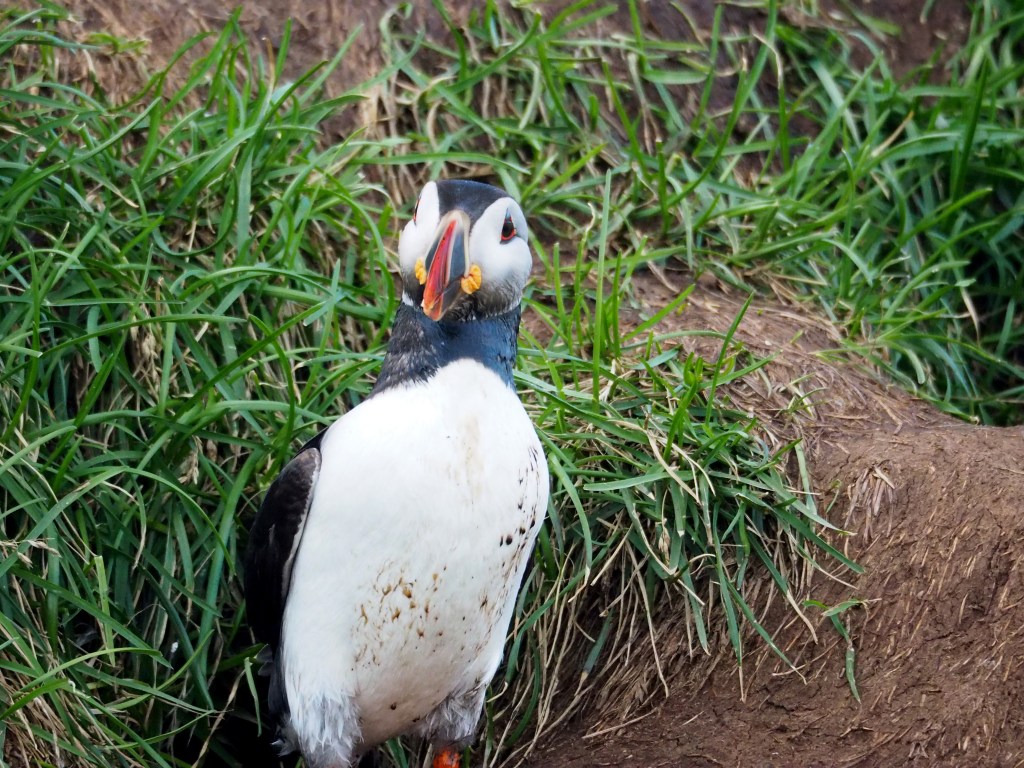
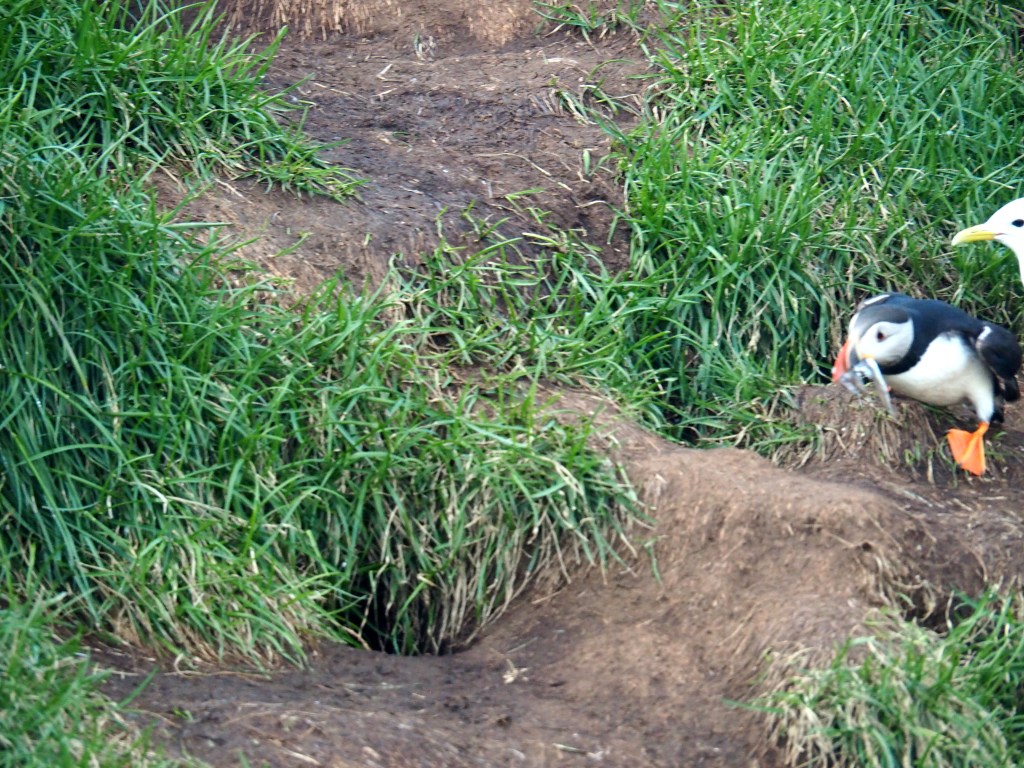
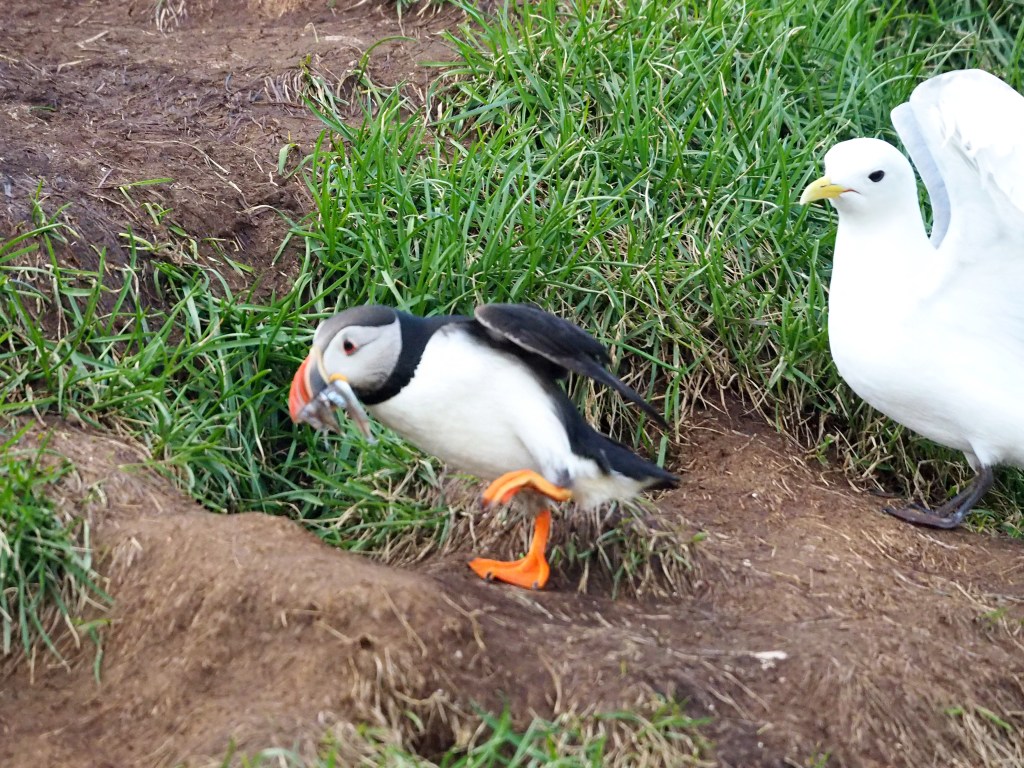
I didn’t like the gulls. These lazy guys tried to steal the fish from the puffins returning from the sea with their catch.
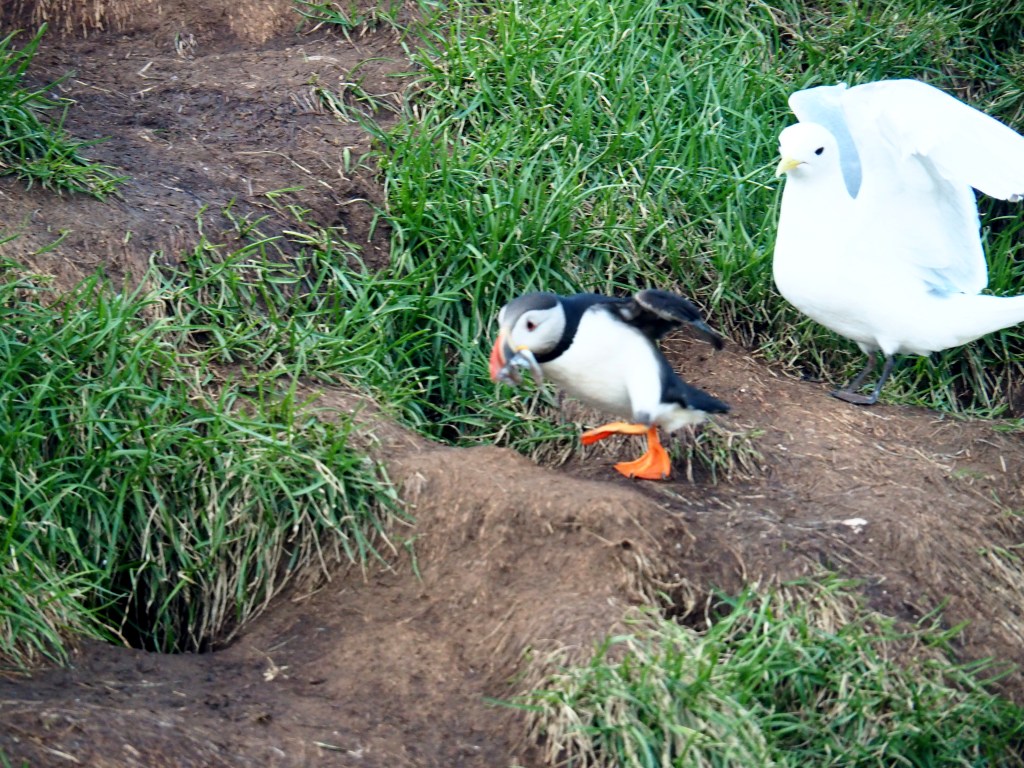


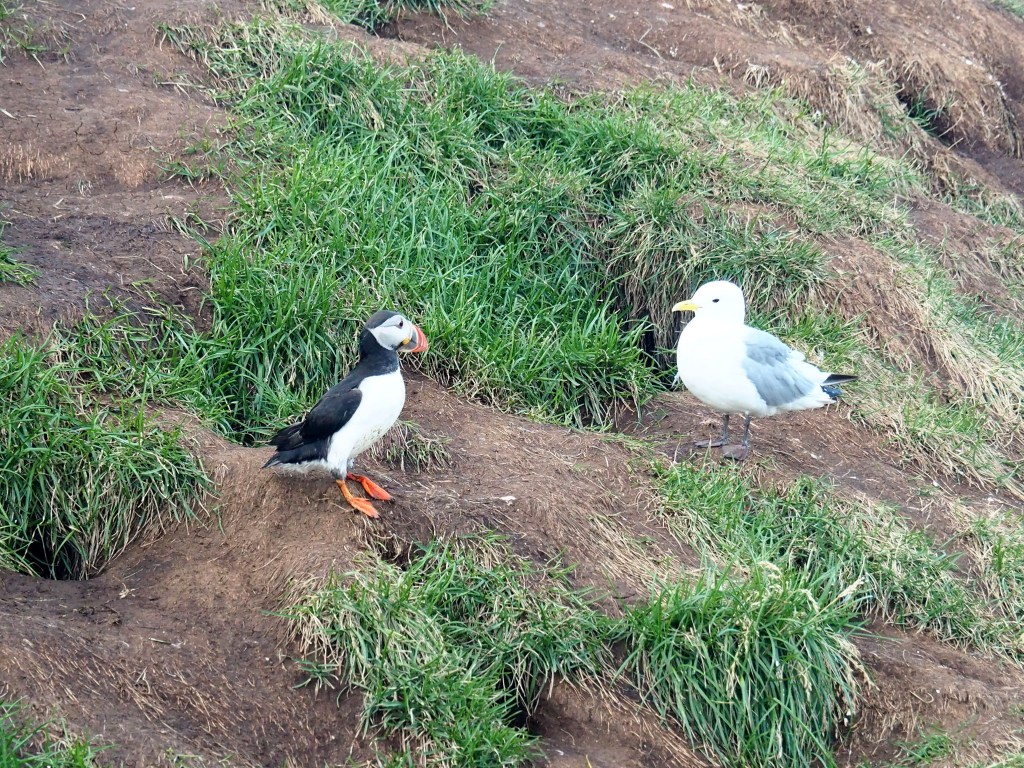
We also had another exciting encounter. On the trail to the cliff, a young man in front of us sneezed. We automatically reacted: “Bless you.” He got embarrassed and started apologizing: “I am not sick; I am allergic to the grass. It is not Covid, don’t worry. You know, I had so many tests, as I am coming from Canada, and the rules are stringent there.” We laughed: “Don’t worry, we are also from Canada, and we know all the rules.” We had a nice chat about home.
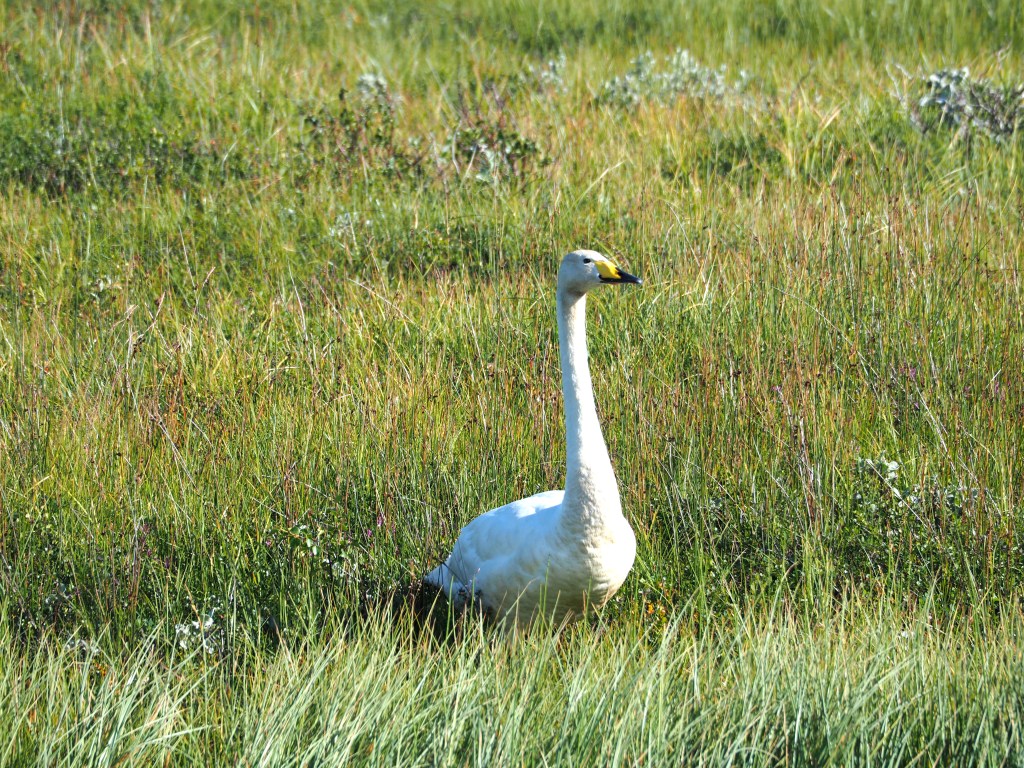
Our last stop for puffin pictures was at the Látrabjarg cliffs in the Westfjords. The drive from our hotel took over 3 hours on a bumpy gravel road. We started early, as we also planned to visit the red sand beach. It was a cold morning; the road was winding around the edge of the fiords and provided stunning views. Looking around, I noticed a massive flock of large white birds in the water below, and I asked Ivan:
“What are these large birds? They look too large for gulls and too white for ducks.”
“They are swans.”
“So many of them! What are they doing there in the wilderness? I thought they were garden birds.”
And my lovely husband started laughing.
“Yes, and they are perennial.”
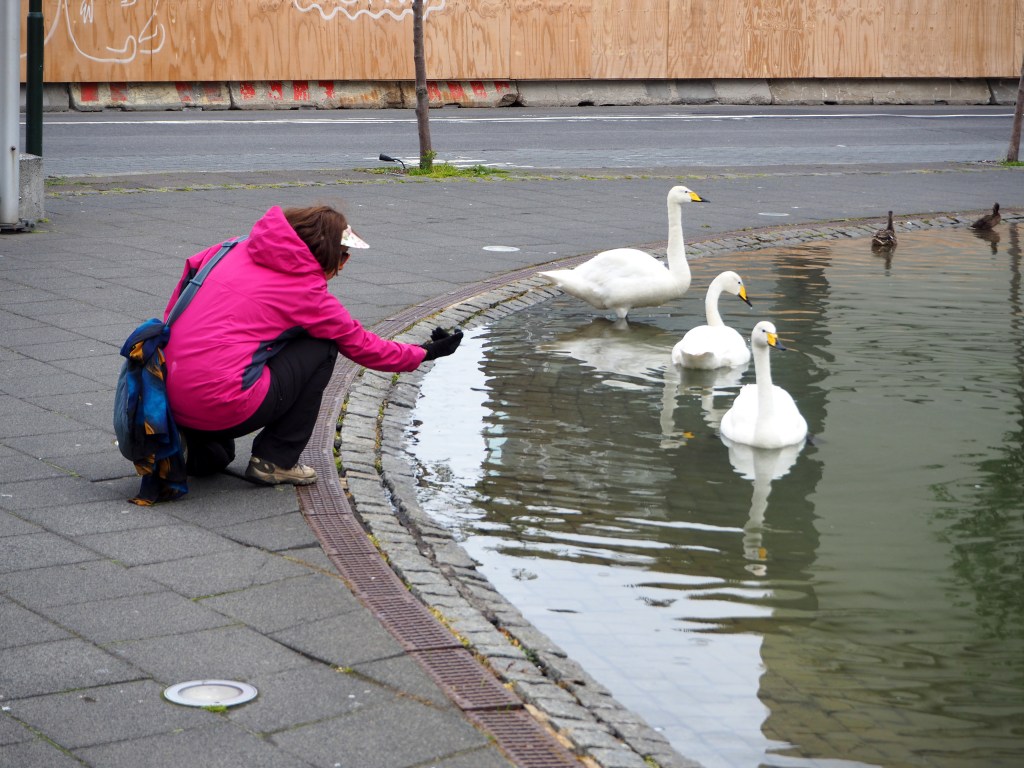
He chuckled for hours after that. And to this day, I still cannot understand what was so funny.
Látrabjarg is the westernmost point of Iceland and is one of the largest seabird cliffs in Europe.
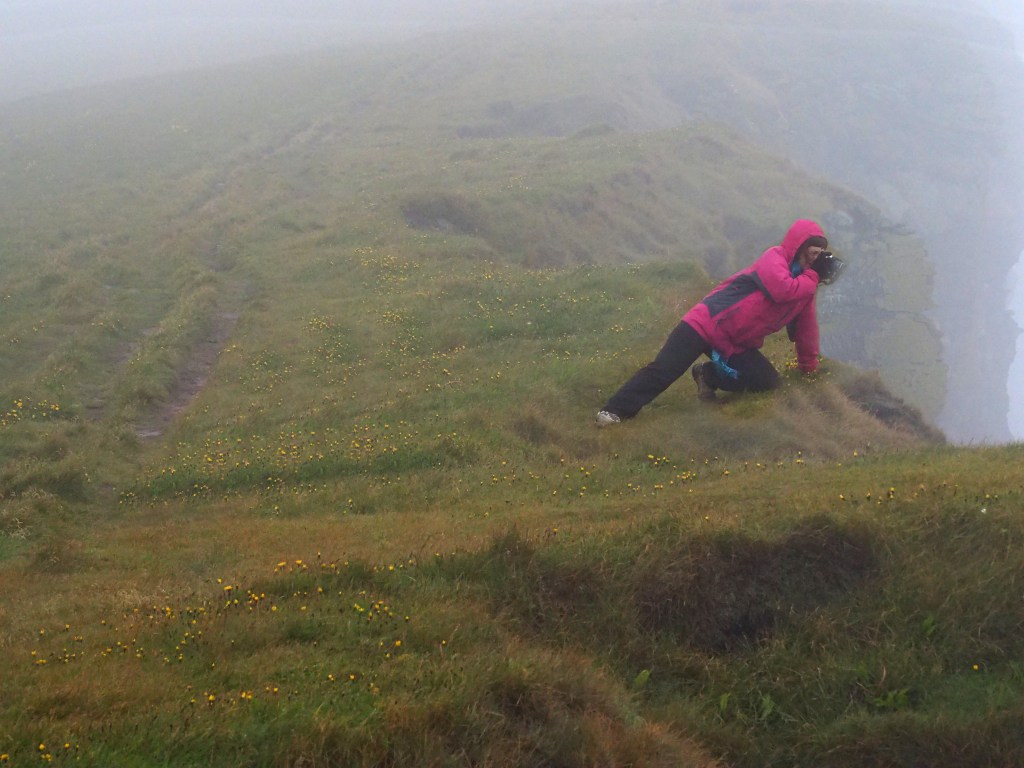
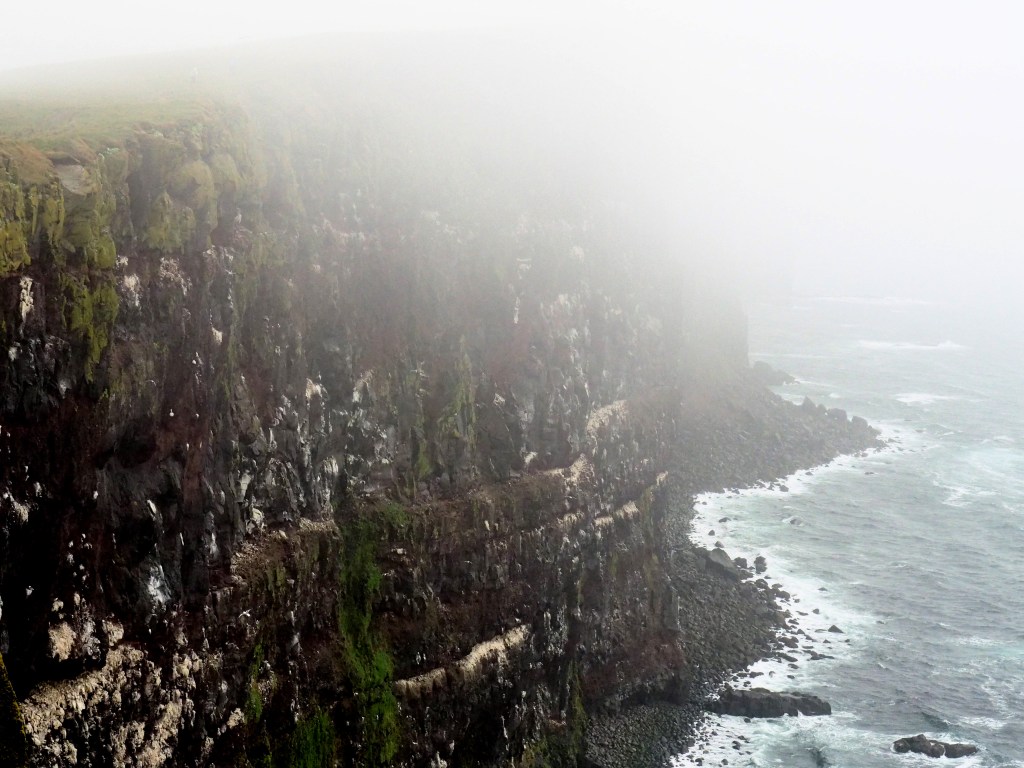
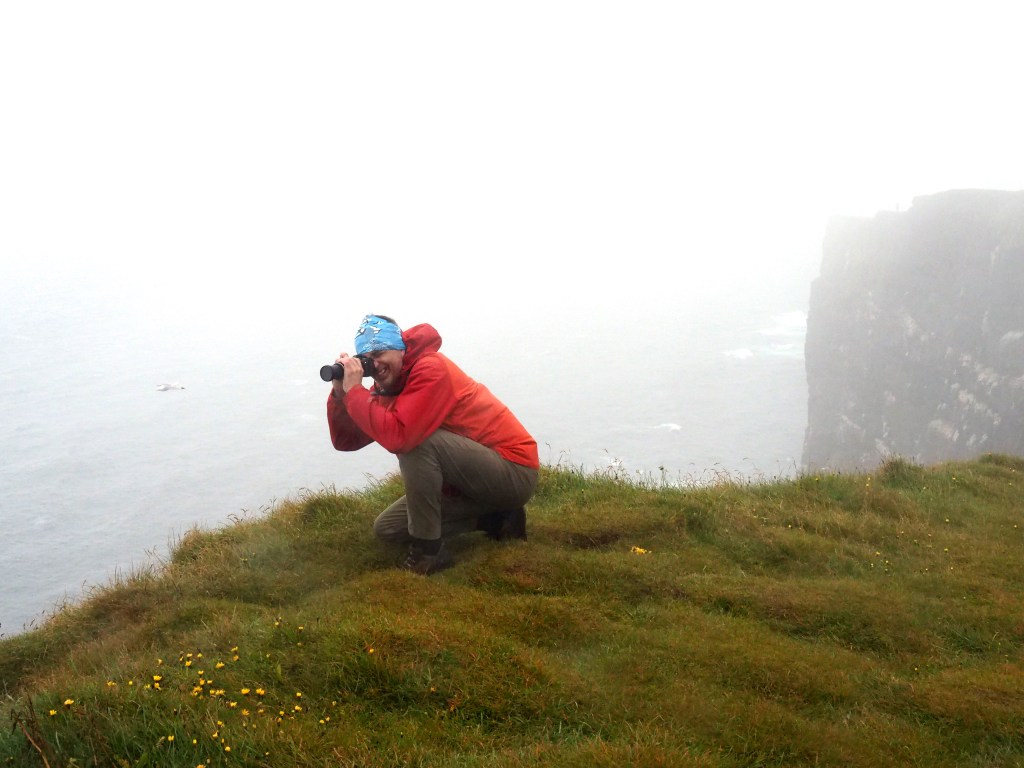
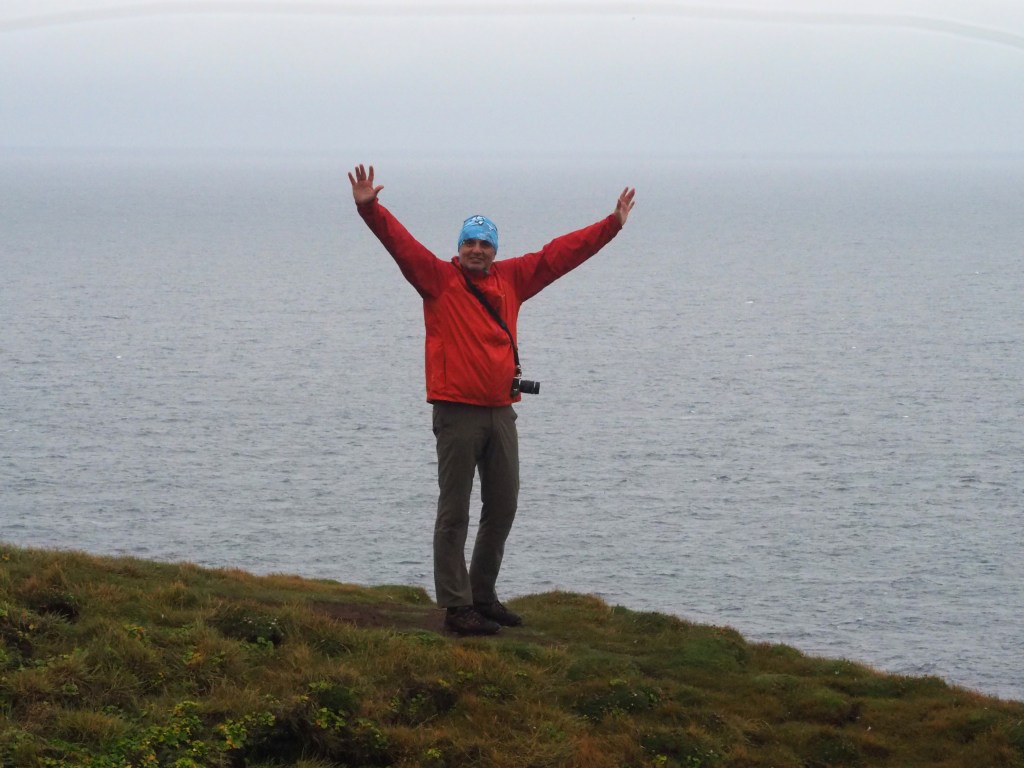
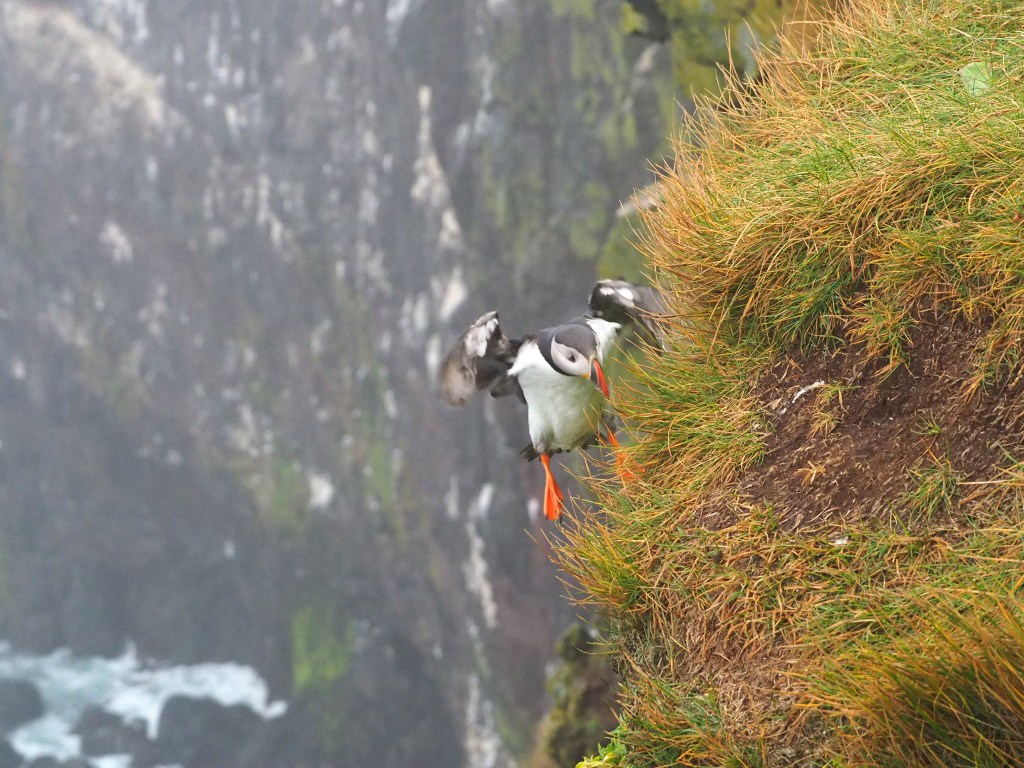

Látrabjarg is home to millions of birds, including puffins, gannets, guillemots, razorbills, white-tailed eagles, red-throated loons, arctic terns, redshanks, snipes, auks, murres, kittiwakes, fulmars, snow buntings, ringed plovers and more. The cliff is 14 kilometres long and more than 400 meters high, and it really looks quite dangerous. But there were so many birds, and we felt rewarded.







Other animals.
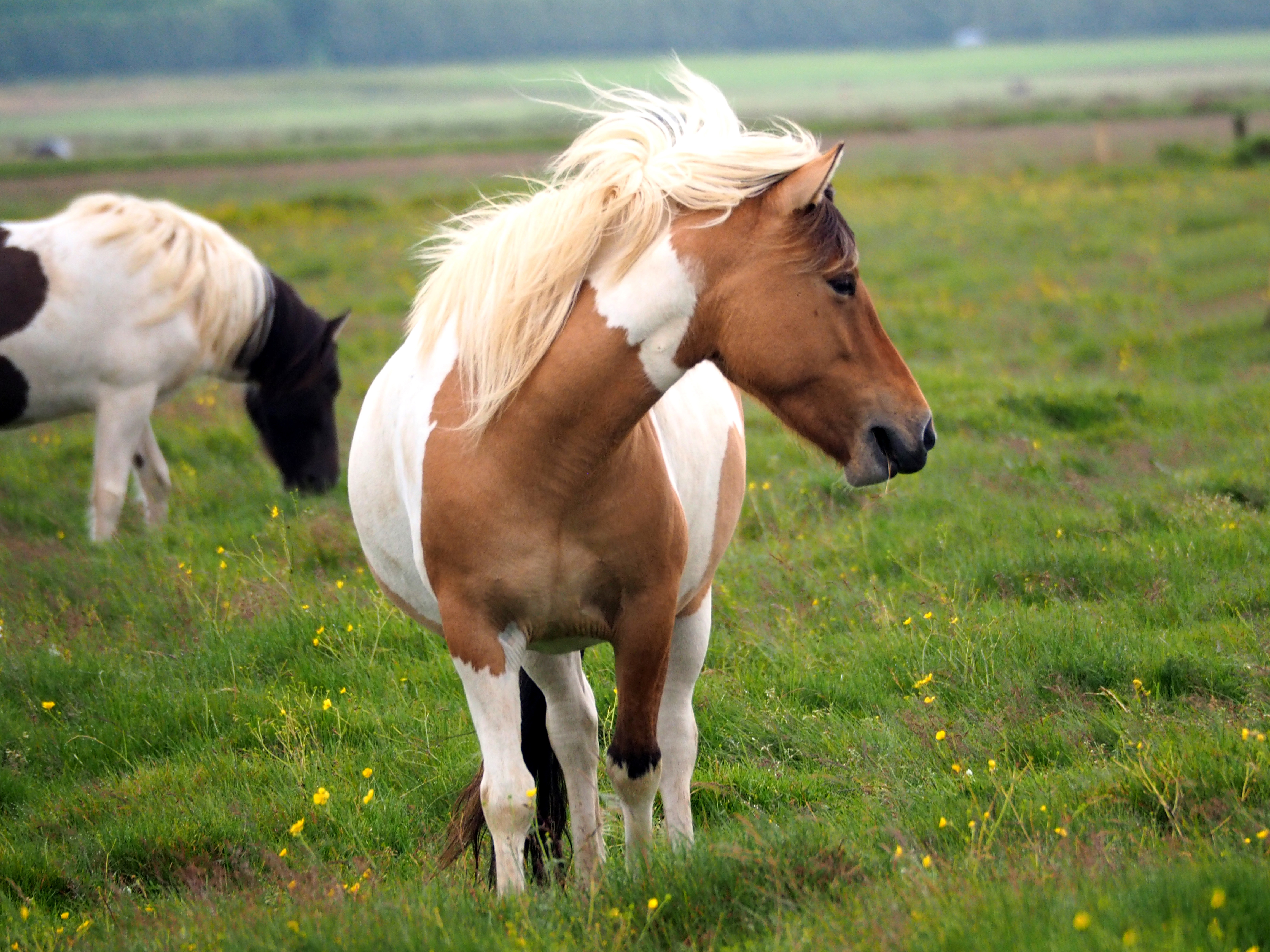
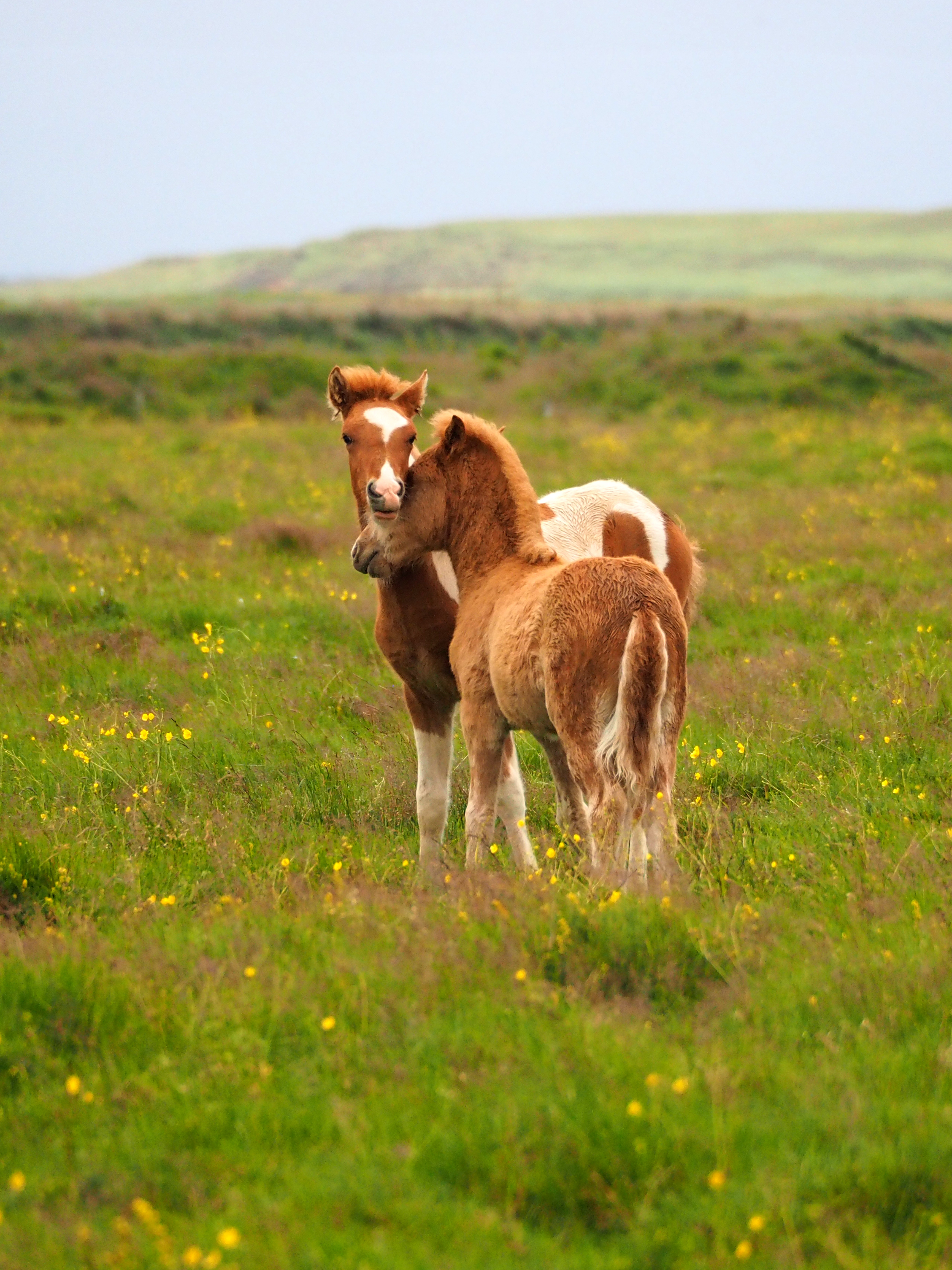
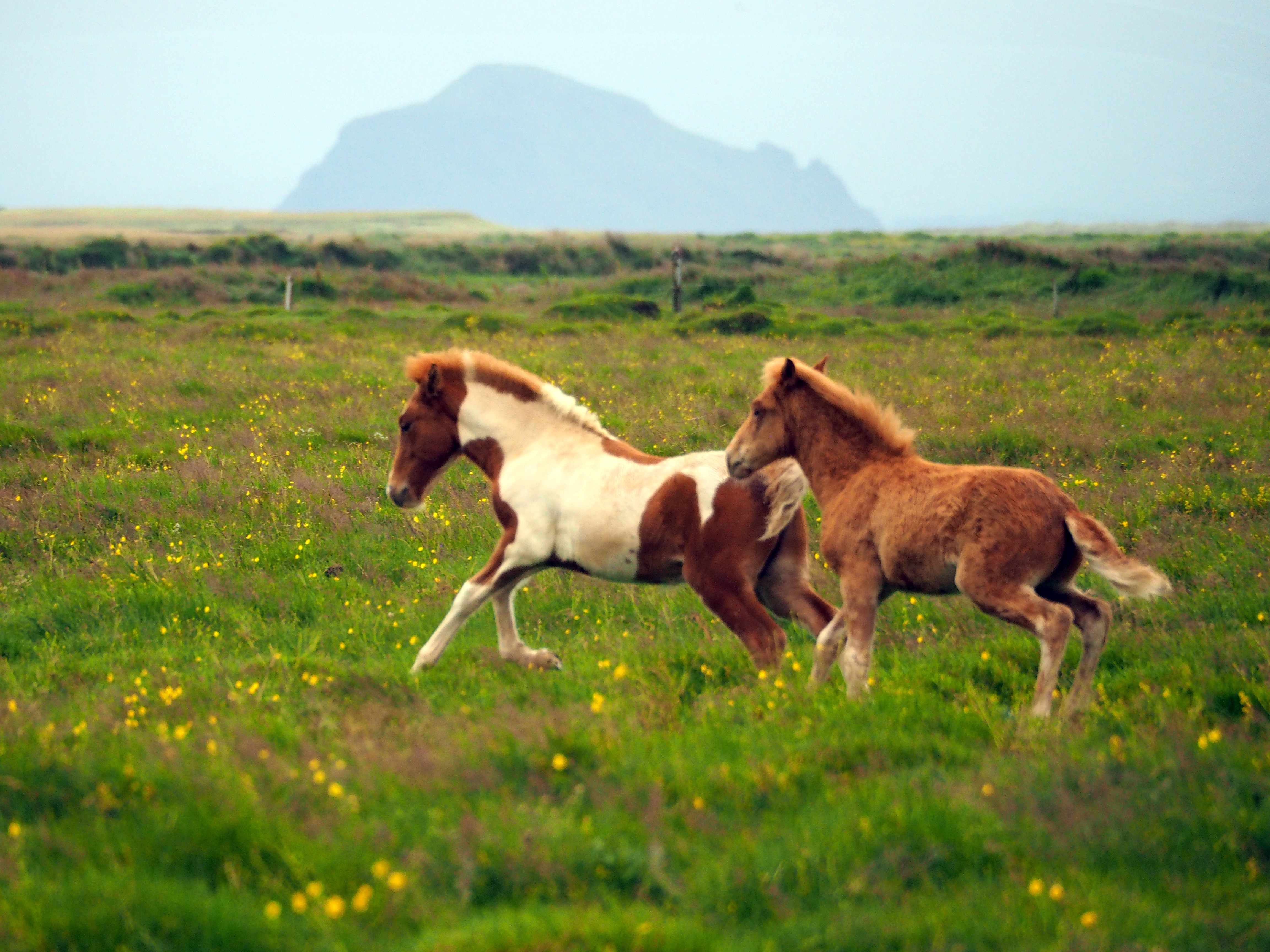
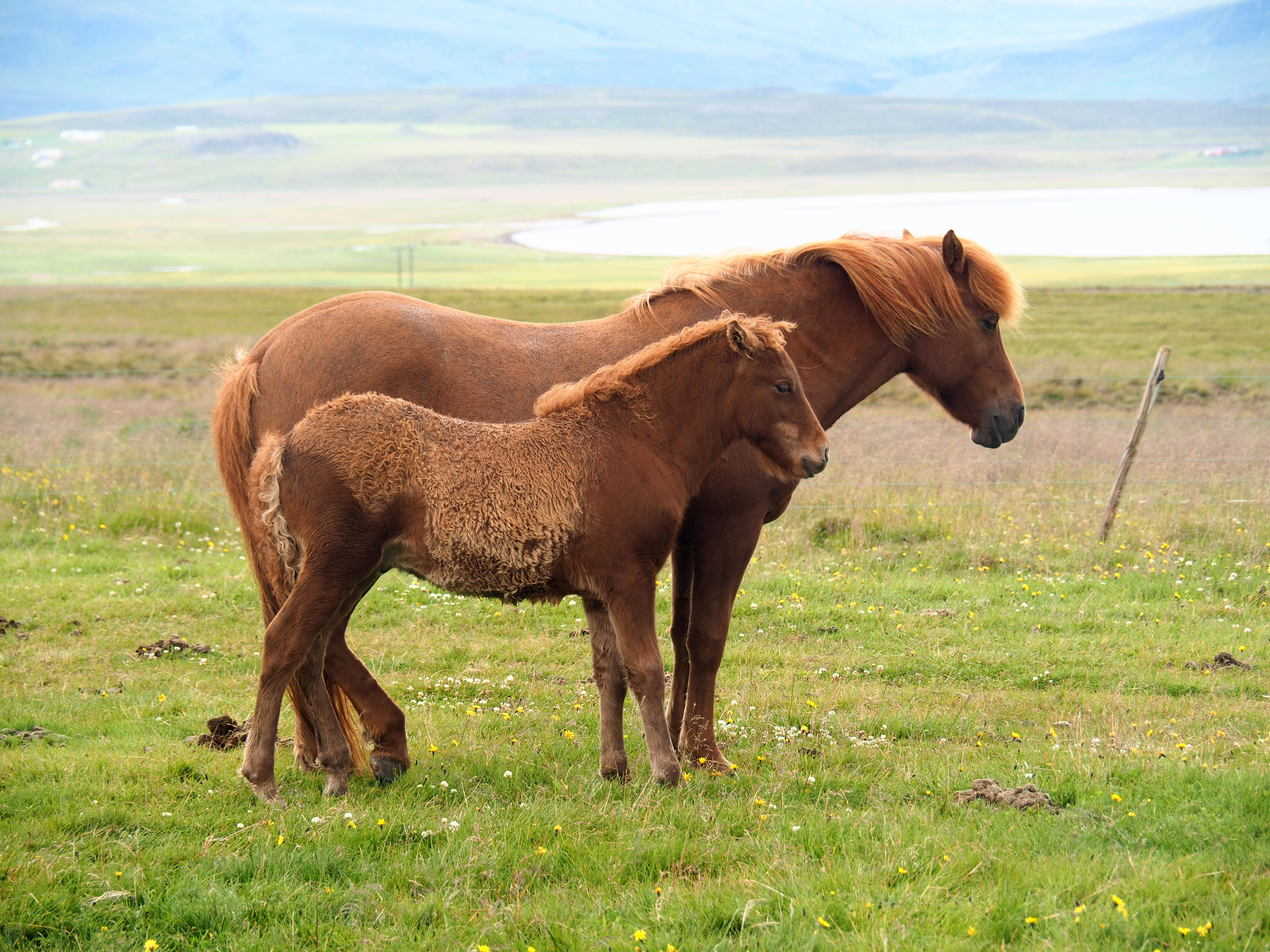
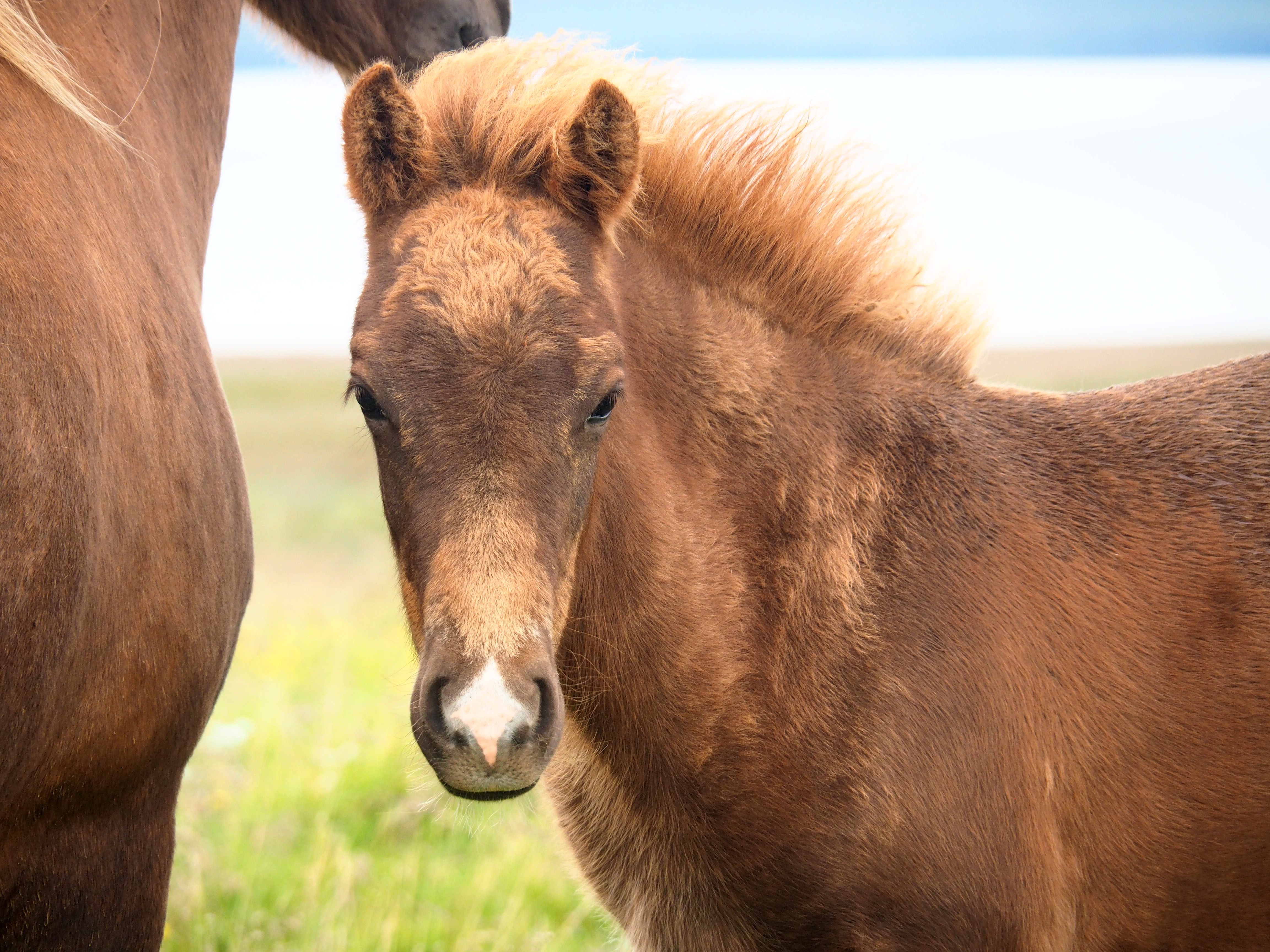
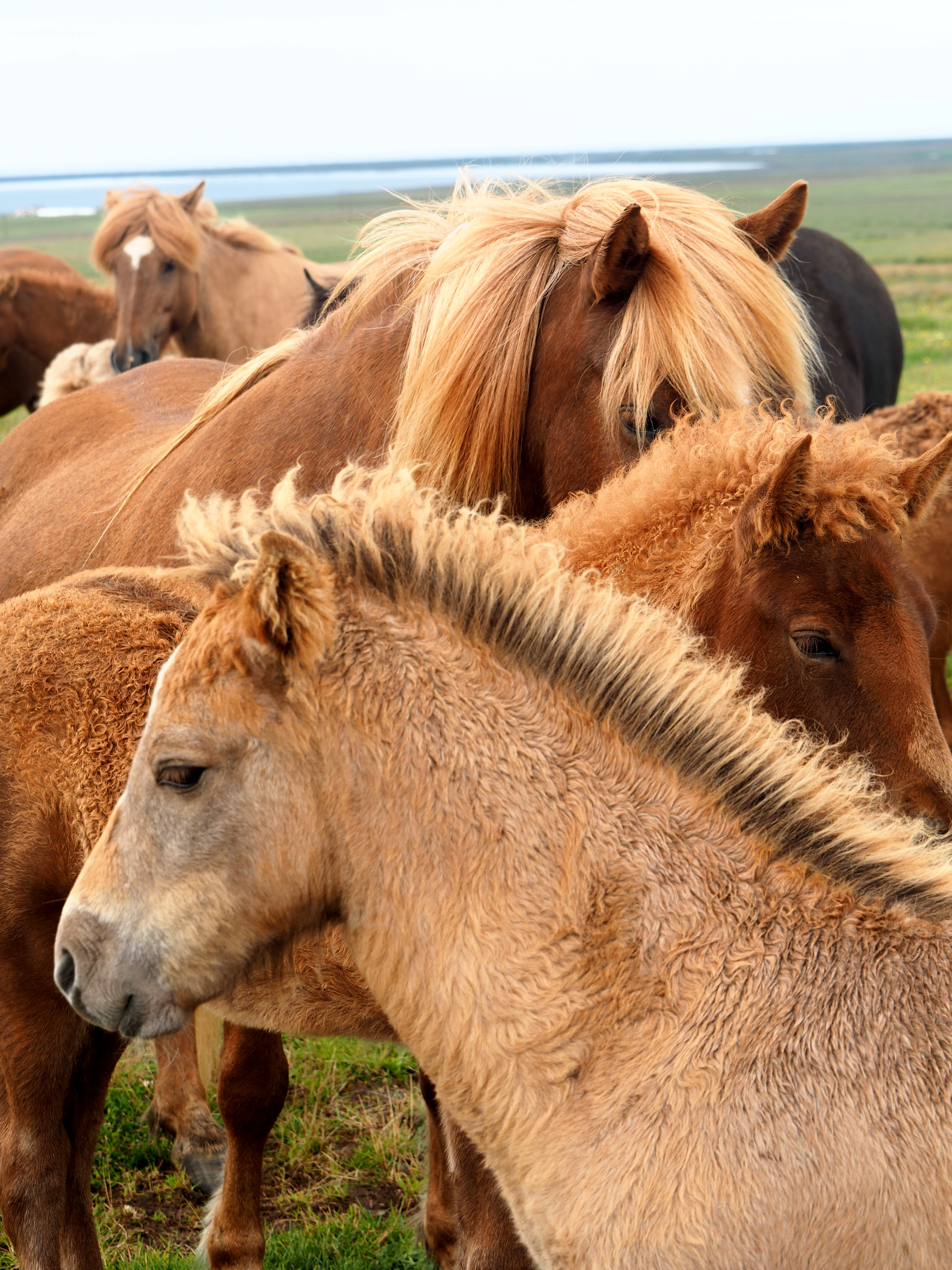
You cannot write about Iceland without mentioning Icelandic horses.







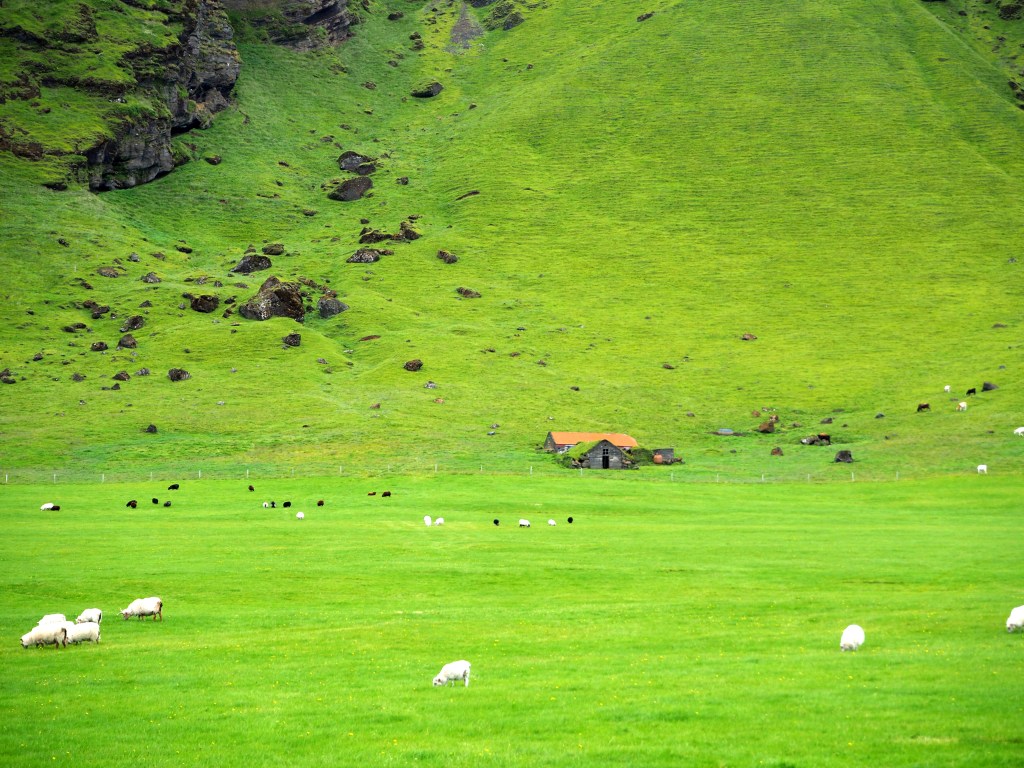
Or the sheep.
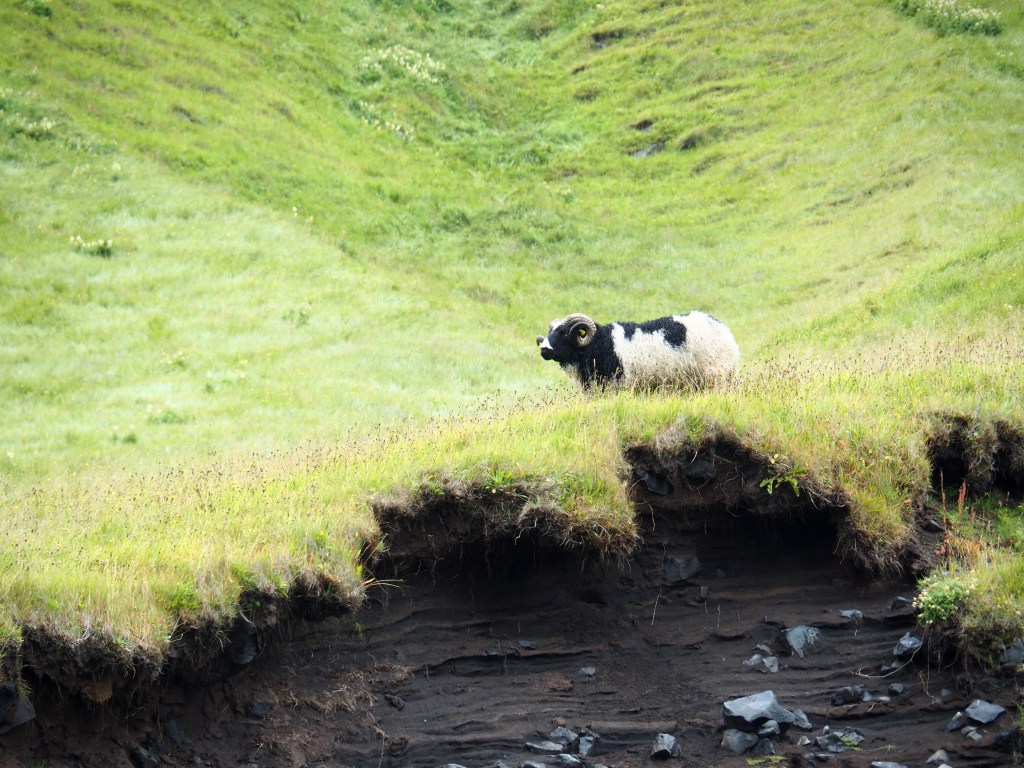
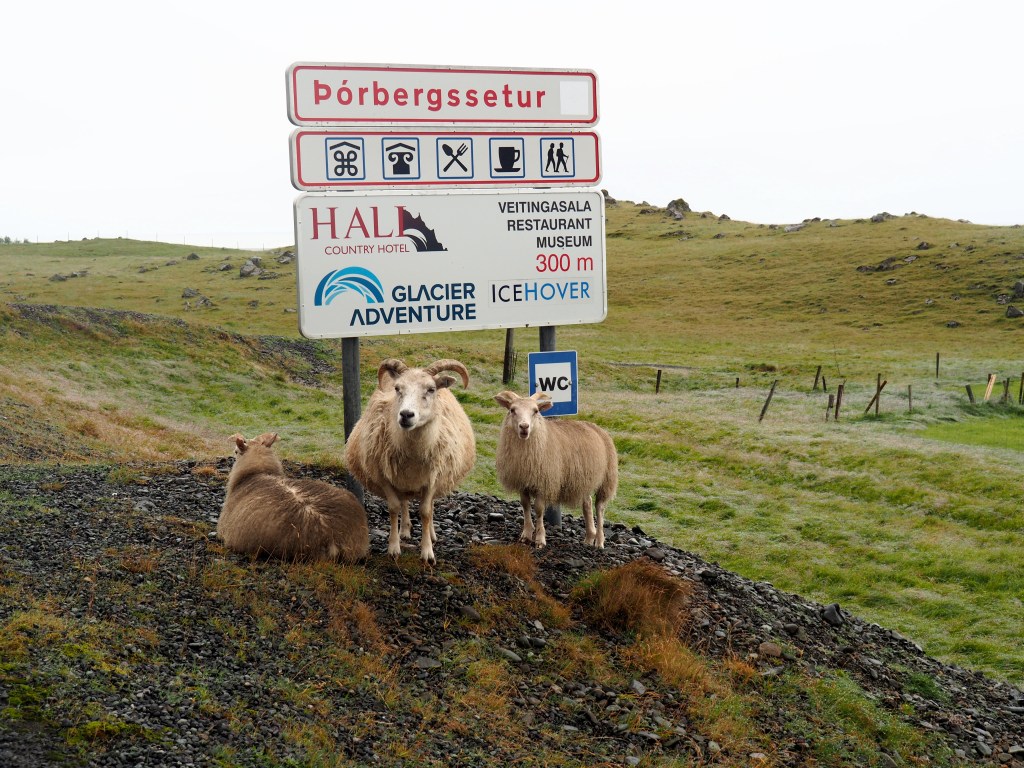


These two look like us – always together, always in love.
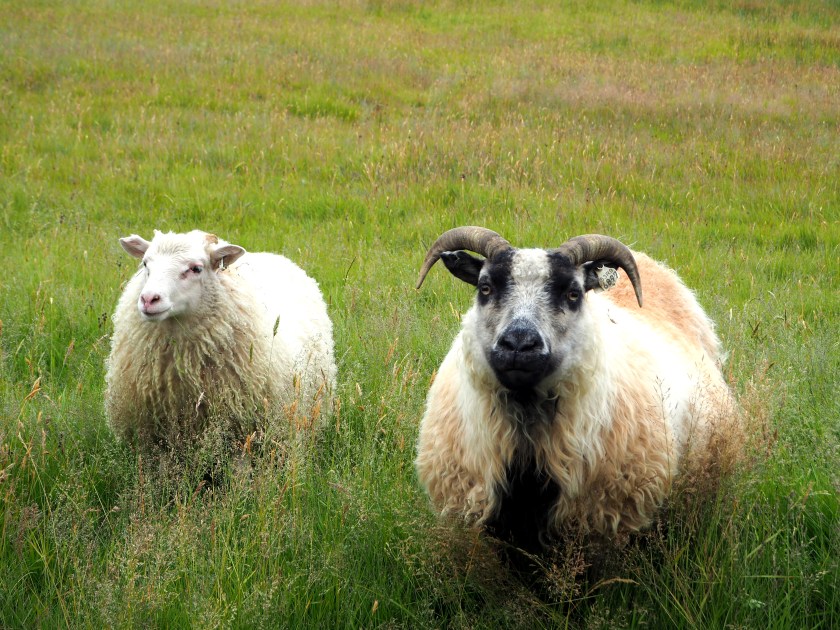
P.S. Please, don’t tell Ivan I call him a ram.
 hit the road...